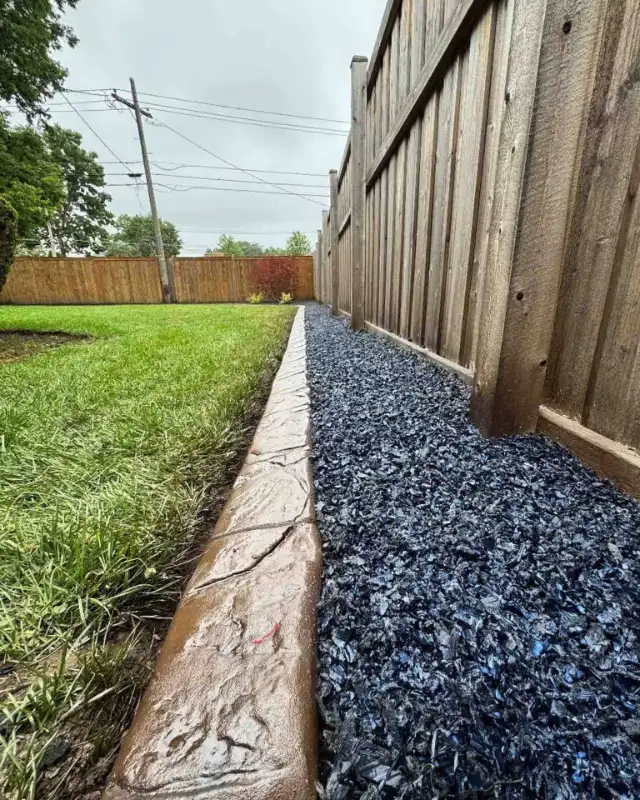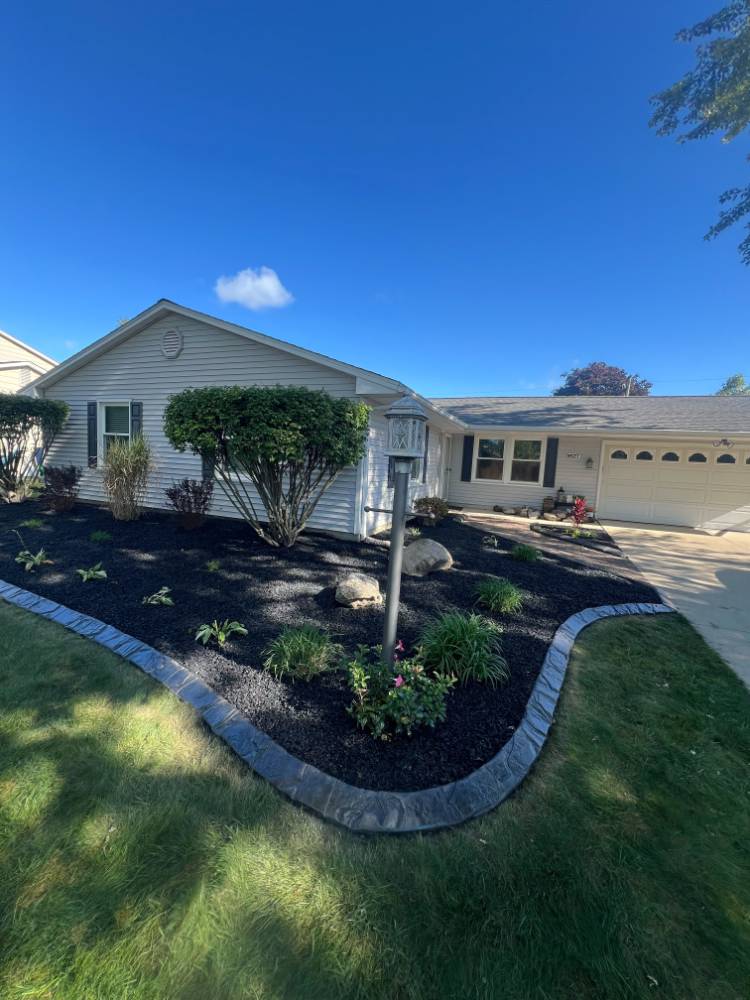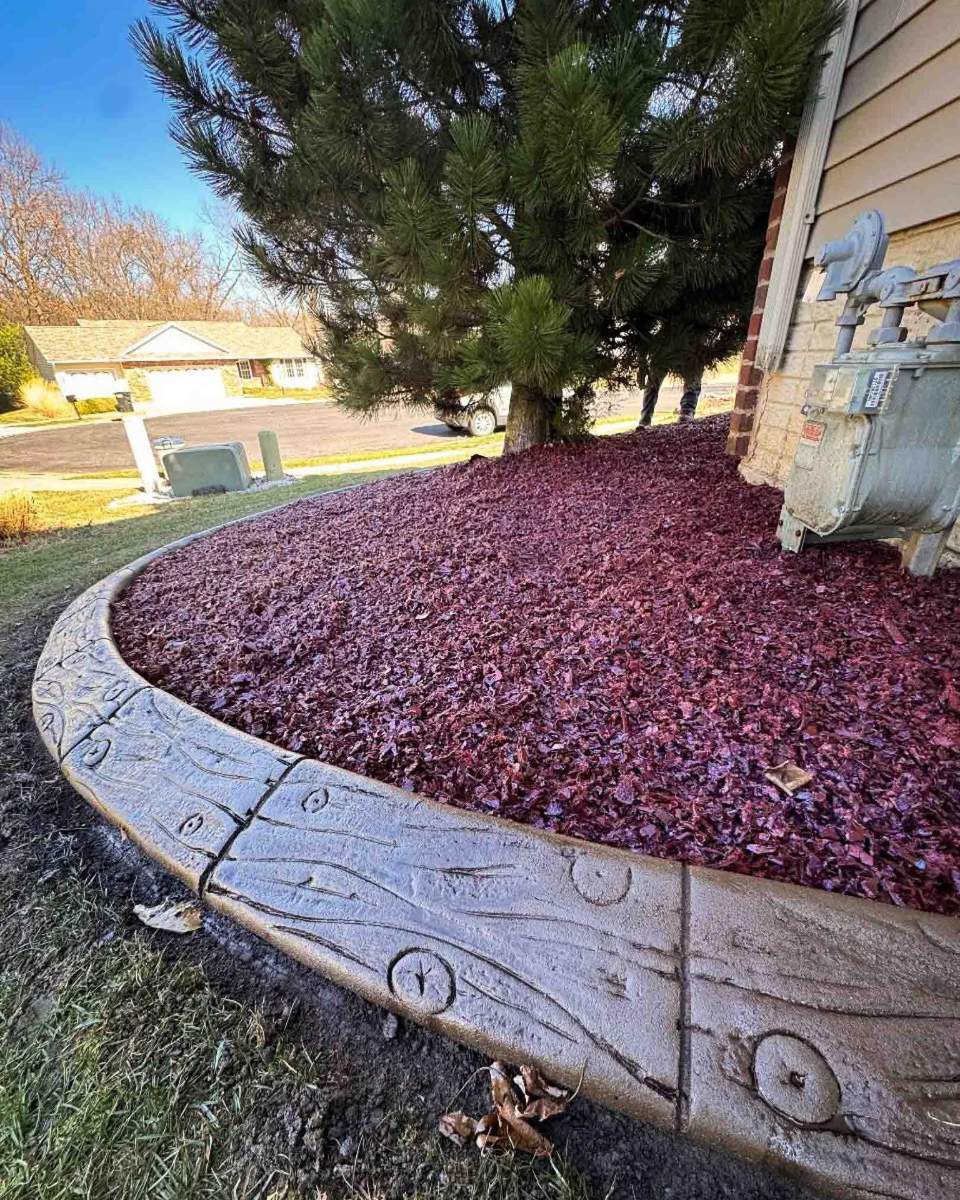


Before you can get an accurate estimate for decorative concrete landscape borders, you need to know how many linear feet of edging your beds require. Measuring correctly ensures you get the right quote and helps you plan your project without surprises.
How Do You Measure Linear Feet for Landscape Edging?
Linear feet simply means the total length of border you need. For straight edges, this is straightforward—just measure from point A to point B. For curved beds, however, you’ll need to follow the curve itself rather than measuring in a straight line across.
Start by walking the perimeter of each bed you want bordered. Use a long measuring tape or a measuring wheel if you have one available. For curved sections, let the tape follow the actual curve of the bed rather than cutting across it. This gives you the true linear footage.
Write down each measurement as you go, then add them all together. If you’re measuring multiple beds, keep separate tallies so you can see exactly how much edging each area needs.
What Tools Make Measuring Landscape Beds Easier?
A 100-foot tape measure works well for most residential properties. These longer tapes help you measure larger beds without constantly moving and adding measurements together.
A measuring wheel is even better for properties with extensive landscaping or long curved borders. You simply roll it along the bed edge and read the total distance. Many hardware stores rent these if you don’t want to purchase one.
For small or oddly shaped beds, flexible measuring tape works fine. Just be patient with curves and make sure the tape follows the contour of the bed closely.
Common Measuring Mistakes to Avoid
The biggest mistake homeowners make is measuring straight across curved beds instead of following the actual curve. A bed that looks like it’s 20 feet across might actually need 35 feet of edging when you account for the curve.
Another common error is forgetting to measure all the edges. If you have an island bed in the middle of your yard, remember you need edging around the entire perimeter. The same goes for beds with interior curves or notches.
Don’t forget about beds around trees or mailboxes. These often get overlooked during initial measurements but still need concrete curbing to look complete and prevent washouts.
Should You Add Extra Footage to Your Estimate?
When measuring for decorative concrete borders, accuracy matters more than padding your numbers. AE Landscape Borders provides free onsite estimates where professionals measure your beds precisely and account for any installation considerations.
That said, if you’re doing preliminary measurements to budget for your project, rounding up slightly on curved sections makes sense. Curves almost always measure longer than they appear. Choosing the right border pattern also depends on your garden layout, so having accurate measurements helps you visualize how different styles will look.
Professional installers like AE Landscape Borders also check for obstacles during their estimate—sprinkler lines, tree roots, buried wires, or drainage issues that might affect installation. These factors don’t change your linear footage, but they matter for planning.
What Happens After You Know Your Linear Feet?
Once you have your measurements, you can request an estimate for decorative concrete edging. Companies typically price by the linear foot, though the final cost depends on factors like pattern selection, color choices, site accessibility, and any special installation requirements.
AE Landscape Borders offers free onsite estimates where they verify measurements, discuss design options, and provide an accurate quote. This eliminates guesswork and ensures you understand exactly what your project will involve.
Most residential installations take just one day to complete, with larger projects occasionally requiring two days. The concrete needs up to 28 days to fully cure, but you can typically resume normal yard activities within a few days.
Frequently Asked Questions
How accurate do my measurements need to be?
Your preliminary measurements don’t need to be perfect since professional installers will verify everything during the onsite estimate. Getting within a few feet on curved sections is fine for budgeting purposes. The installer’s measurements determine the actual quote.
Do corners count as extra linear feet?
Corners don’t add much extra length, but they do add complexity. Measure through the corner following the path the edging will take. Right-angle corners typically add less than a foot to your total measurement, while rounded corners follow the curve.
Can I measure once and use it for multiple estimates?
Yes, once you have accurate linear footage measurements, you can share them with different contractors. Just make sure you measured correctly the first time by following curves and including all bed edges.
Ready to turn your measurements into a beautiful, permanent landscape solution? Contact AE Landscape Borders today for a free onsite estimate. Their experienced team serves homeowners across the Midwest and Southeast with lifetime-warrantied concrete curbing that eliminates the need for constant edging replacement.