

When planning new landscape edging, one of the first decisions you’ll face is whether to install straight lines or flowing curves. Both styles create clean separation between your lawn and garden beds, but the shape you choose dramatically affects your yard’s overall look and feel.
The good news? There’s no wrong answer — it comes down to your home’s architecture, your landscape layout, and your personal taste. Let’s break down how each style works so you can make the right choice for your property.
What’s the Visual Impact of Straight vs. Curved Borders?
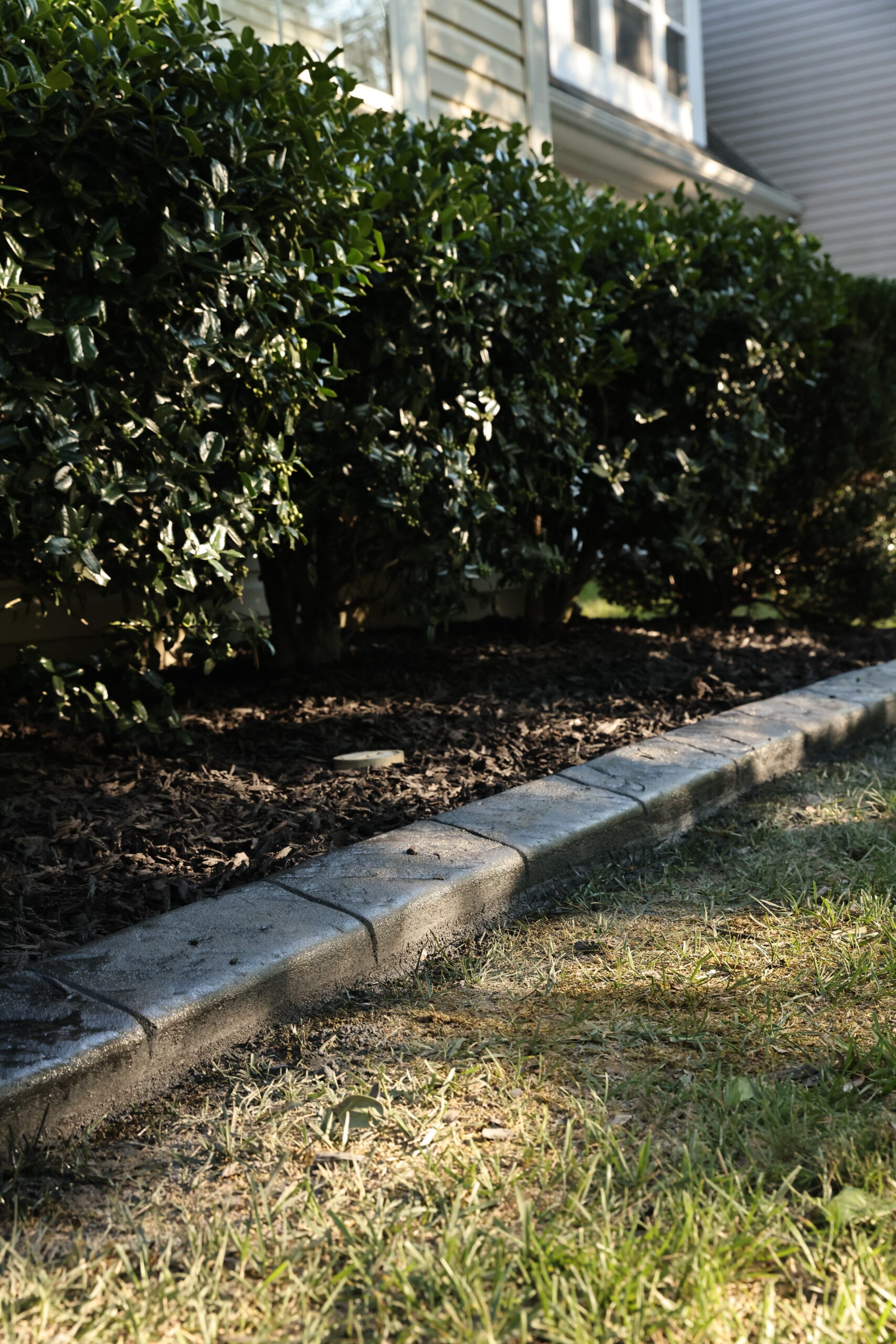
Straight borders create a formal, structured look that complements traditional and contemporary homes. They emphasize geometry and order, making them ideal for properties with rectangular beds, symmetrical layouts, or modern architectural lines. Straight concrete curbing installed by AE Landscape Borders can frame foundation plantings, define pathway edges, or create crisp property boundaries that feel intentional and polished.
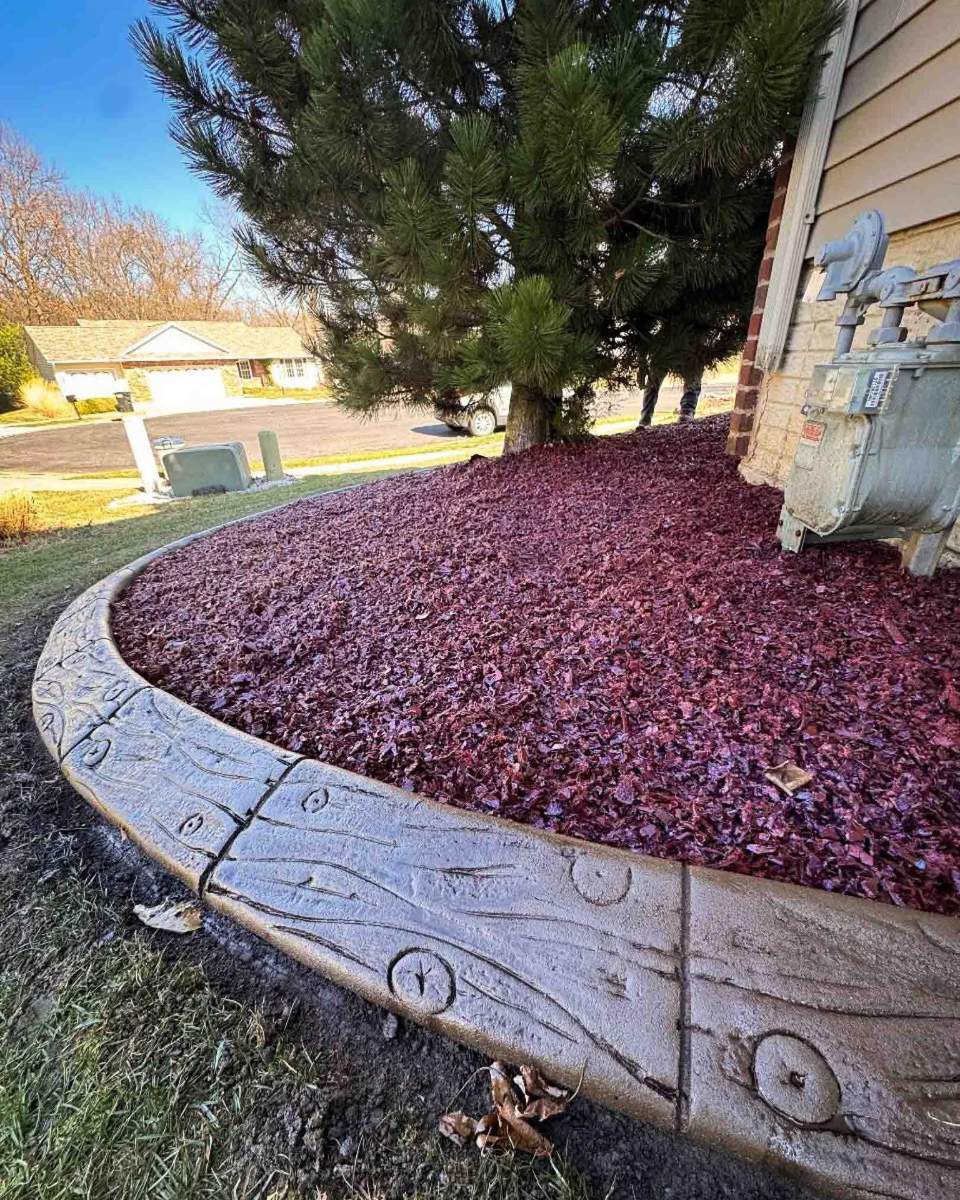
Curved borders, on the other hand, soften the landscape and create a more natural, organic feel. Gentle curves guide the eye through your yard and can make smaller spaces feel larger by adding visual movement. They’re particularly effective for island beds, winding walkways, or properties with rolling terrain.
Many homeowners find that a combination works best — straight lines along driveways and foundations, with curves defining free-form garden beds or tree rings. Choosing the right border pattern also depends on your garden layout, and decorative concrete edging adapts to either style seamlessly.
Which Border Shape Is Easier to Maintain?
Both straight and curved landscape borders dramatically reduce maintenance compared to no edging at all, but there are subtle differences worth considering.
Straight edging simplifies mowing since you can follow the line without adjusting direction. It’s also easier to measure and replicate if you’re planning symmetrical beds on opposite sides of a walkway or driveway. AE Landscape Borders installs straight concrete curbing with precise corners and consistent width, eliminating the washout and shifting common with plastic or metal edging.
Curved borders require a bit more attention during mowing, but the tradeoff is visual interest and flexibility. Curves can navigate around tree roots, utility lines, or sprinkler heads more gracefully than rigid straight lines. During installation, AE Landscape Borders can adjust curves on the spot to accommodate obstacles without compromising the finished look.
Either way, decorative concrete edging holds its shape permanently, so you won’t spend weekends repositioning shifted plastic strips or dealing with rusted metal stakes.
How Do I Decide Which Shape Fits My Yard?
Start by looking at your home’s exterior. If your house features strong horizontal lines, brick facades, or modern design elements, straight borders typically harmonize better with that aesthetic. Homes with cottage-style architecture, stone accents, or informal landscaping often benefit from the softer appeal of curves.
Next, consider your existing landscape features. Do you have mature trees with root systems that need navigating? Are your beds already curved, or would you prefer to start fresh with clean lines? Walk your property and visualize both options — or ask the AE Landscape Borders team during your free onsite estimate. They can sketch different layouts and show you photos of similar projects in your area.
Think about long-term flexibility too. Proper drainage plays a role in how long your edging lasts, and curves can help direct water flow more naturally around sloped areas. Straight lines work better for controlled drainage channels or alongside hardscaping like patios and sidewalks.
Finally, remember that decorative concrete borders come in multiple patterns and colors. The same curved layout in Missouri Flagstone pattern creates a completely different feel than Fractured Rock or Slate, giving you even more design control regardless of the shape you choose.
Frequently Asked Questions
Can I mix straight and curved borders in the same yard?
Absolutely. Most well-designed landscapes use both styles strategically — straight lines for structured areas like driveways and walkways, curves for garden beds and island features. The key is making transitions feel intentional rather than random.
Do curved borders cost more than straight ones?
Not necessarily. Installation costs depend more on total linear footage and site conditions than on shape. Curves sometimes add slight complexity around tight turns, but pricing is determined during your onsite estimate based on your specific project.
How tight can curves be with concrete curbing?
Decorative concrete edging handles moderate curves beautifully, but extremely tight radiuses (like very small circles) may require adjustment. During your consultation, AE Landscape Borders will recommend curves that both look natural and maintain the structural integrity of the curbing.
Ready to transform your landscape with professional concrete borders? Whether you prefer the clean geometry of straight lines or the flowing beauty of natural curves, AE Landscape Borders creates custom edging that fits your vision. Contact them today for a free onsite estimate and see how decorative concrete curbing can elevate your home’s curb appeal — backed by a lifetime warranty.