

Most homeowners think more mulch equals better landscaping, but piling it too deep can actually harm your plants and trees. Understanding the right mulch depth keeps your beds healthy while still looking sharp.
How Much Mulch Should You Actually Use?
The ideal mulch depth for most landscape beds is 2 to 4 inches. This range gives you enough coverage to suppress weeds, retain moisture, and regulate soil temperature without creating problems.
At 2 inches, mulch starts doing its job effectively. At 4 inches, you’re getting maximum benefit. Anything beyond that starts working against you.
For established trees and shrubs, keep mulch 2 to 3 inches away from the trunk or stem. For flower beds and ground cover areas, an even 3-inch layer works well across the entire space.
What Happens When You Use Too Much Mulch?
Overmulching creates a host of problems most homeowners don’t see coming. When mulch exceeds 4 to 6 inches deep, it starts holding too much moisture against plant stems and tree bark.
This excess moisture invites rot, fungal diseases, and pest problems. Tree roots can actually start growing up into the mulch layer instead of down into the soil, which makes trees unstable and more vulnerable to drought.
The infamous “mulch volcano” — that cone of mulch piled high around tree trunks — is one of the most common landscaping mistakes. It looks substantial, but it’s slowly killing the tree by trapping moisture against the bark and inviting disease.
Heavy mulch layers also prevent water from reaching the soil underneath. Rain just runs off the top instead of soaking through to the roots where plants need it.
Better Alternatives to Thick Mulch Layers
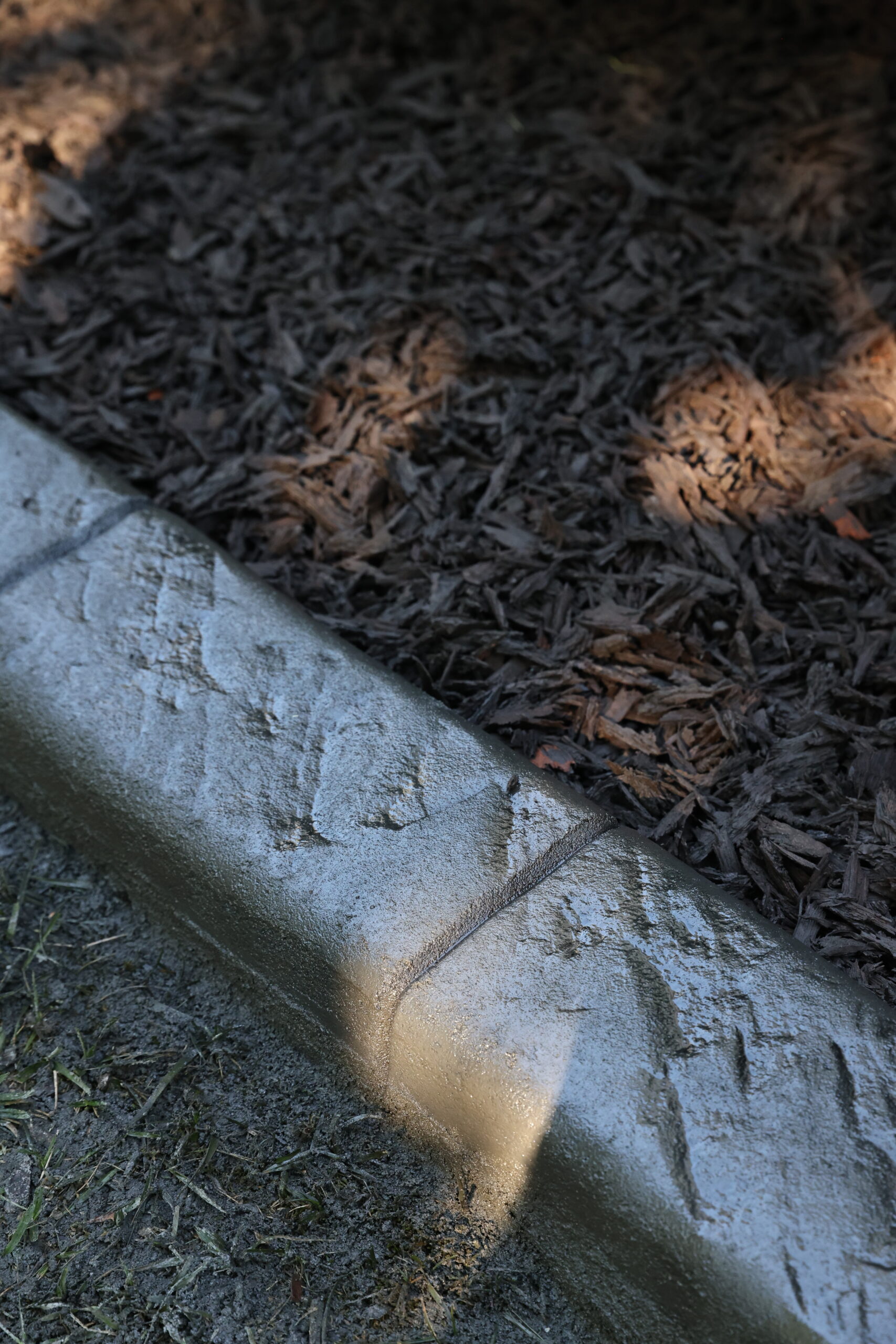
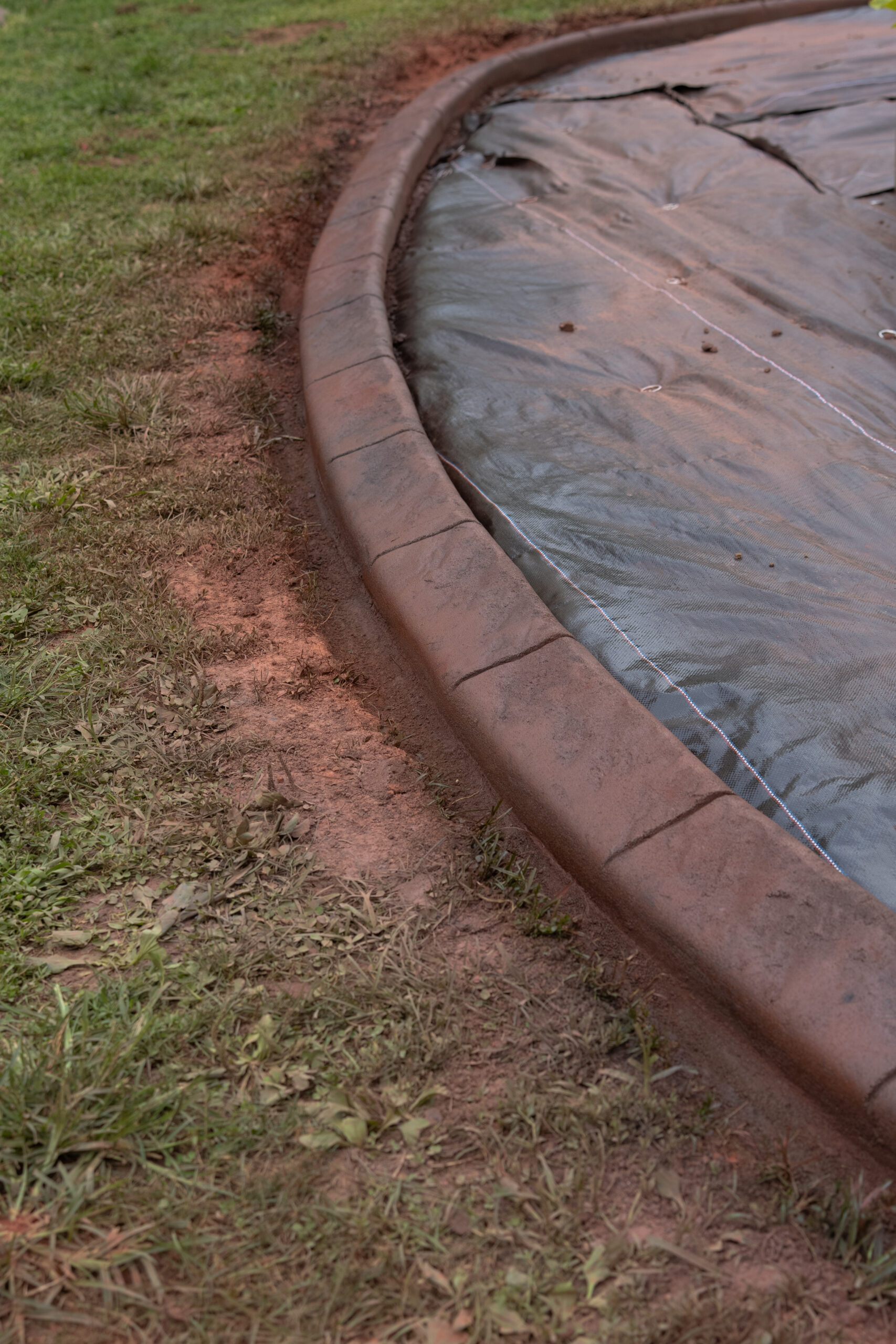
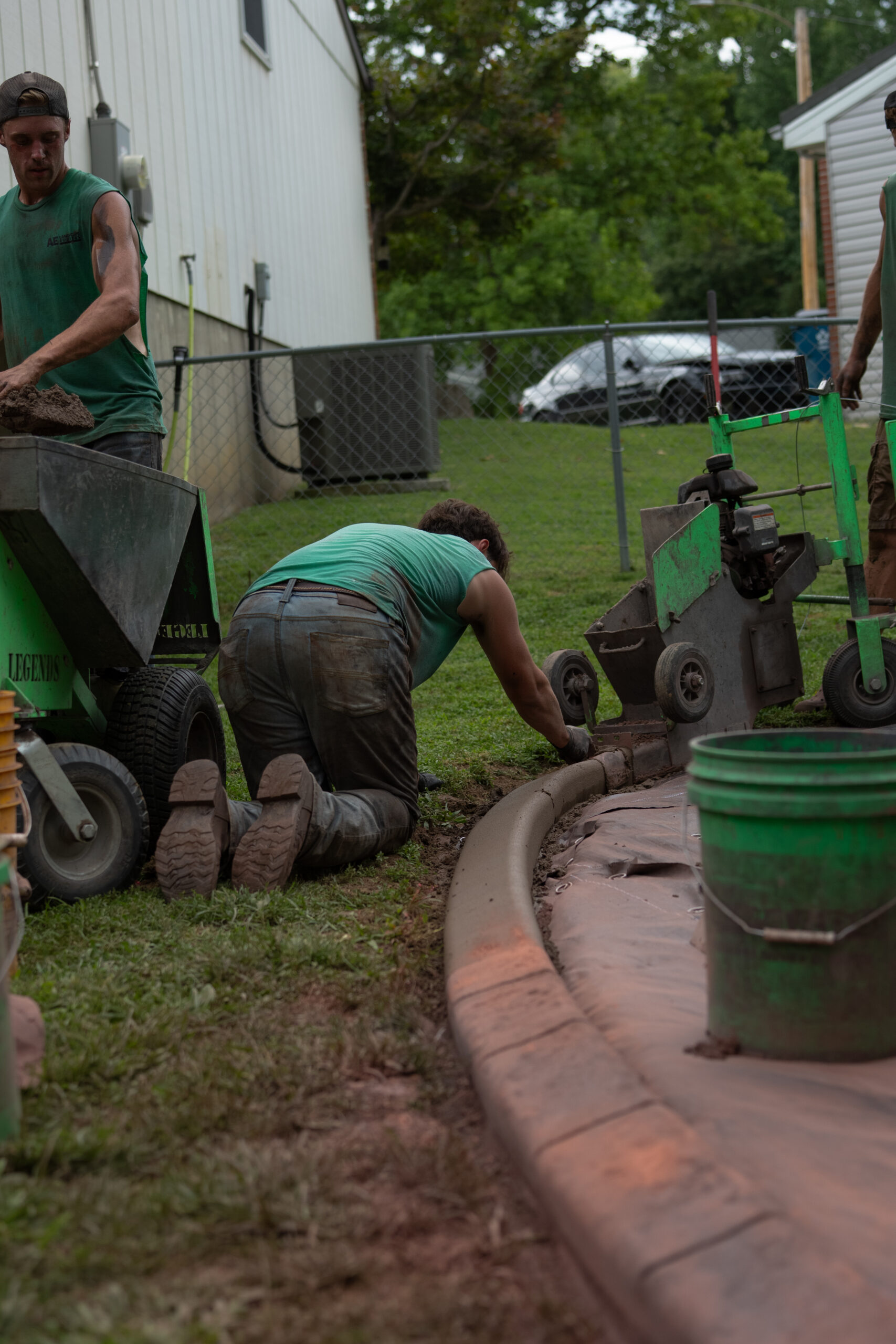
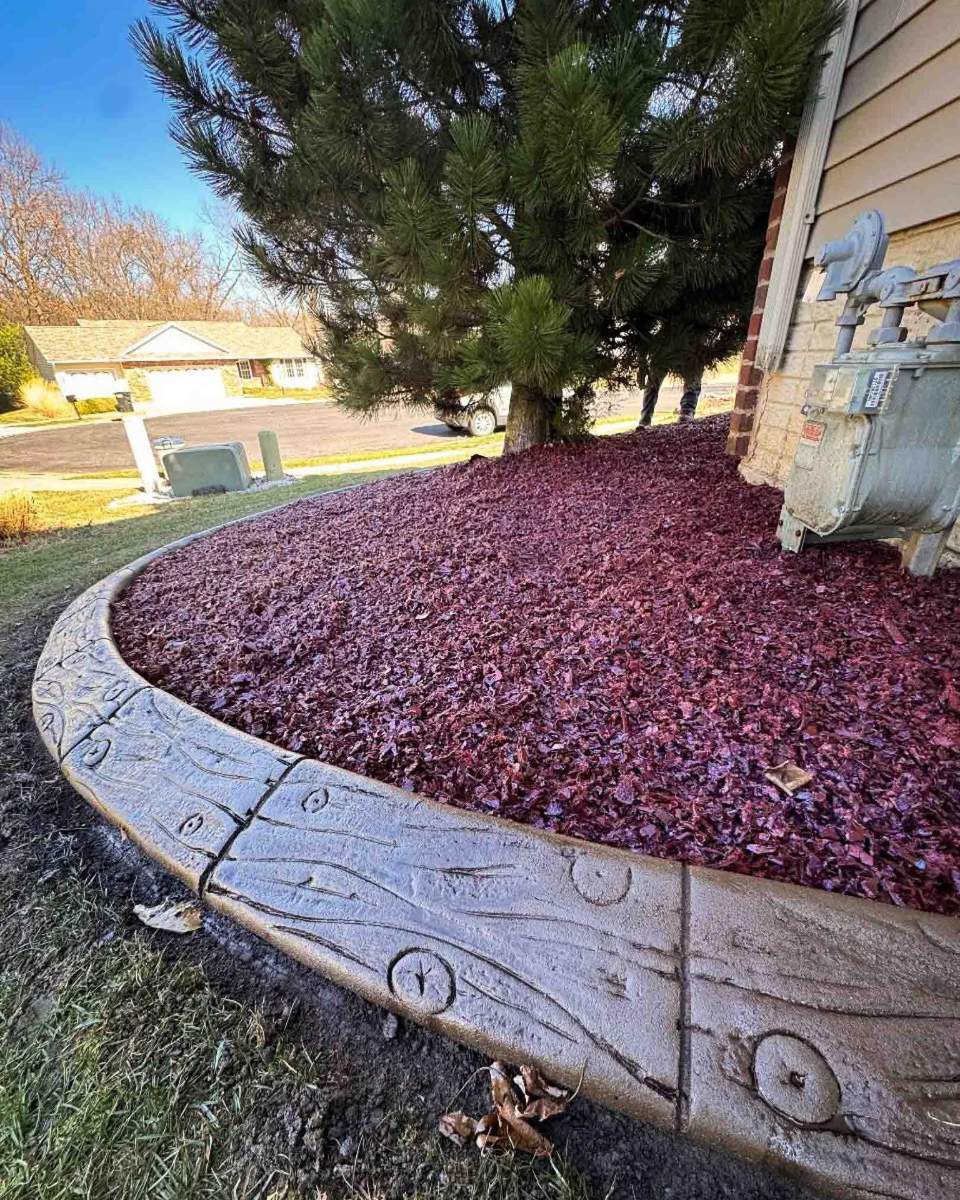
If you’re tempted to pile on extra mulch to reduce maintenance, consider decorative concrete borders from AE Landscape Borders instead. Professional concrete curbing creates a clean edge that keeps mulch contained at the proper depth while dramatically reducing your trimming and edging work.
With defined borders in place, you need less mulch overall because it stays where you put it. The edging prevents mulch from washing into the lawn or spreading thin over time.
AE Landscape Borders installs lifetime-warrantied concrete edging that holds up far better than plastic or metal alternatives. The curbing comes in patterns like Missouri Flagstone and Slate, plus colors from Beige to Charcoal, so it actually enhances your landscaping rather than just containing it.
For homeowners across the Midwest and Southeast, this combination of proper mulch depth and professional edging means better-looking beds with less ongoing work. Choosing the right border pattern also depends on your garden layout and the overall style you want to achieve.
Another option: rubber mulch. AE Landscape Borders offers lifetime-warrantied rubber mulch that never needs replacing. It maintains consistent depth year after year, eliminating the need to refresh organic mulch annually. It won’t compact, wash away, or decompose.
How to Fix Overmulched Beds
If your beds already have too much mulch, the fix is straightforward but requires some effort. Pull back the excess mulch until you’re down to 2 to 4 inches deep.
Around trees, create a donut shape — mulch extends out to the drip line but stays several inches away from the trunk. No mulch should actually touch the bark.
You can spread the extra mulch in other areas of your landscape, use it as compost material, or dispose of it. Just don’t be tempted to leave it piled up where it causes problems.
Once you’ve corrected the depth, installing decorative concrete edging helps maintain that proper level going forward. The borders keep everything in place and make future mulch refreshes simpler since you know exactly where the edges are.
Frequently Asked Questions
Should I remove old mulch before adding new mulch?
Not necessarily. If your existing mulch has decomposed to less than 2 inches, you can add a fresh layer on top. If it’s still 3 to 4 inches deep, remove some of the old material first. Never let total mulch depth exceed 4 inches.
Does mulch depth affect weed growth?
Yes, but only up to a point. A 3 to 4 inch layer effectively blocks most weeds. Going deeper doesn’t improve weed control and creates other problems instead. Proper depth plus quality landscape edging gives you the best weed prevention.
How often should I refresh my mulch?
Organic mulch typically needs topping off once a year, usually in spring. Check depth first — you might only need an inch or two to bring beds back to the ideal 3 to 4 inch range. Rubber mulch eliminates this annual maintenance entirely.
Ready to maintain perfect mulch depth with less ongoing effort? AE Landscape Borders serves homeowners throughout the Midwest and Southeast with professional decorative concrete edging installations. Contact them today for a free onsite estimate and discover how the right borders transform your landscape maintenance routine.