

Plastic edging might seem like an easy fix for your garden beds, but most homeowners discover it warps, cracks, and shifts within just a few seasons. If you’re tired of replacing cheap plastic borders or wondering why your carefully installed edging keeps popping out of the ground, you’re not alone—there’s a reason professional landscapers rarely recommend it for long-term landscape solutions.
Why Does Plastic Edging Fail So Quickly?
Plastic landscape edging breaks down faster than most homeowners expect. The material becomes brittle when exposed to UV rays from constant sun exposure, leading to cracks and breaks that ruin the clean lines you worked so hard to create.
Temperature swings make the problem worse. During hot summer months, plastic expands and loses its shape. When winter arrives, it contracts and becomes even more prone to cracking. This constant expansion and contraction means your edging gradually loses its structural integrity.
Ground movement from freeze-thaw cycles pushes plastic edging right out of the soil. You’ll spend every spring pushing those sections back into place, only to watch them pop up again after the next heavy rain or temperature drop. The shallow anchoring system simply can’t compete with natural ground movement.
Lawn mowers and string trimmers are plastic edging’s worst enemy. One accidental bump can crack or shatter a section, leaving you with jagged edges and an incomplete border. Even careful maintenance eventually takes its toll on this fragile material.
What About Metal Edging—Is That Any Better?
Metal edging lasts longer than plastic, but it comes with its own frustrations. Steel edging rusts over time, leaving orange stains on your concrete or pavers. Even galvanized or powder-coated options eventually succumb to moisture and soil contact.
Aluminum holds up better against rust, but it’s easily bent or dented during installation or routine yard work. Once metal edging loses its shape, it’s nearly impossible to restore the crisp, professional look you want for your landscape beds.
Sharp edges on metal borders create safety hazards, especially in yards where kids and pets play. The material also conducts heat, which can stress plants growing close to the edging during summer months.
What Landscape Border Material Actually Lasts?
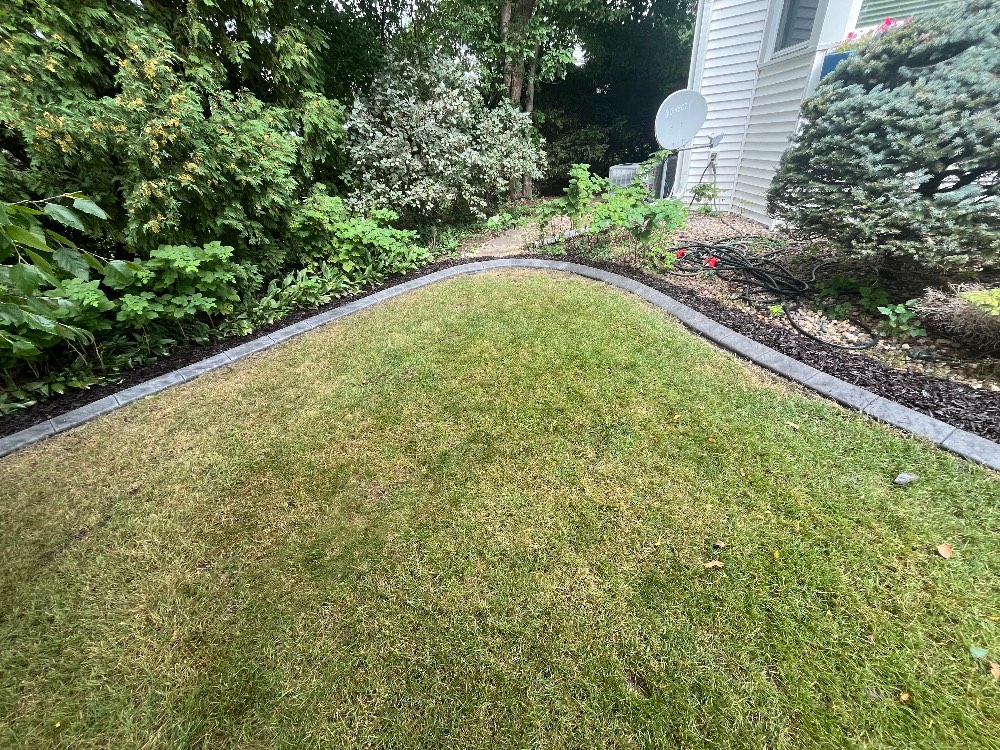
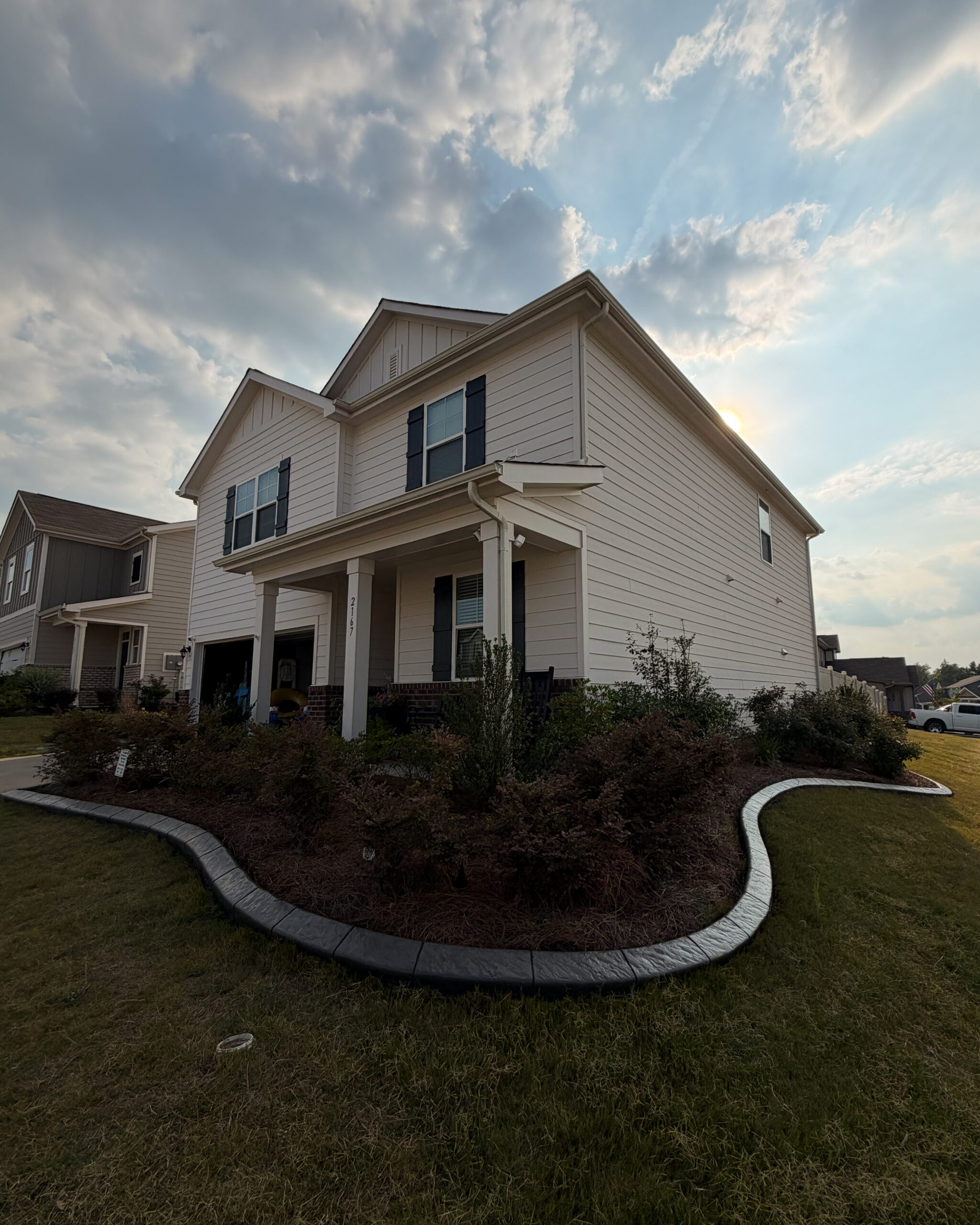
Decorative concrete borders solve the durability problems that plague plastic and metal edging. AE Landscape Borders installs continuous concrete curbing that won’t crack, warp, or shift like cheaper alternatives—and backs every installation with a lifetime warranty.
Professional concrete edging goes several inches deep into the ground, creating a permanent barrier that stays put through freeze-thaw cycles, heavy rains, and ground movement. The material doesn’t break down under UV exposure, and it maintains its shape and color for decades.
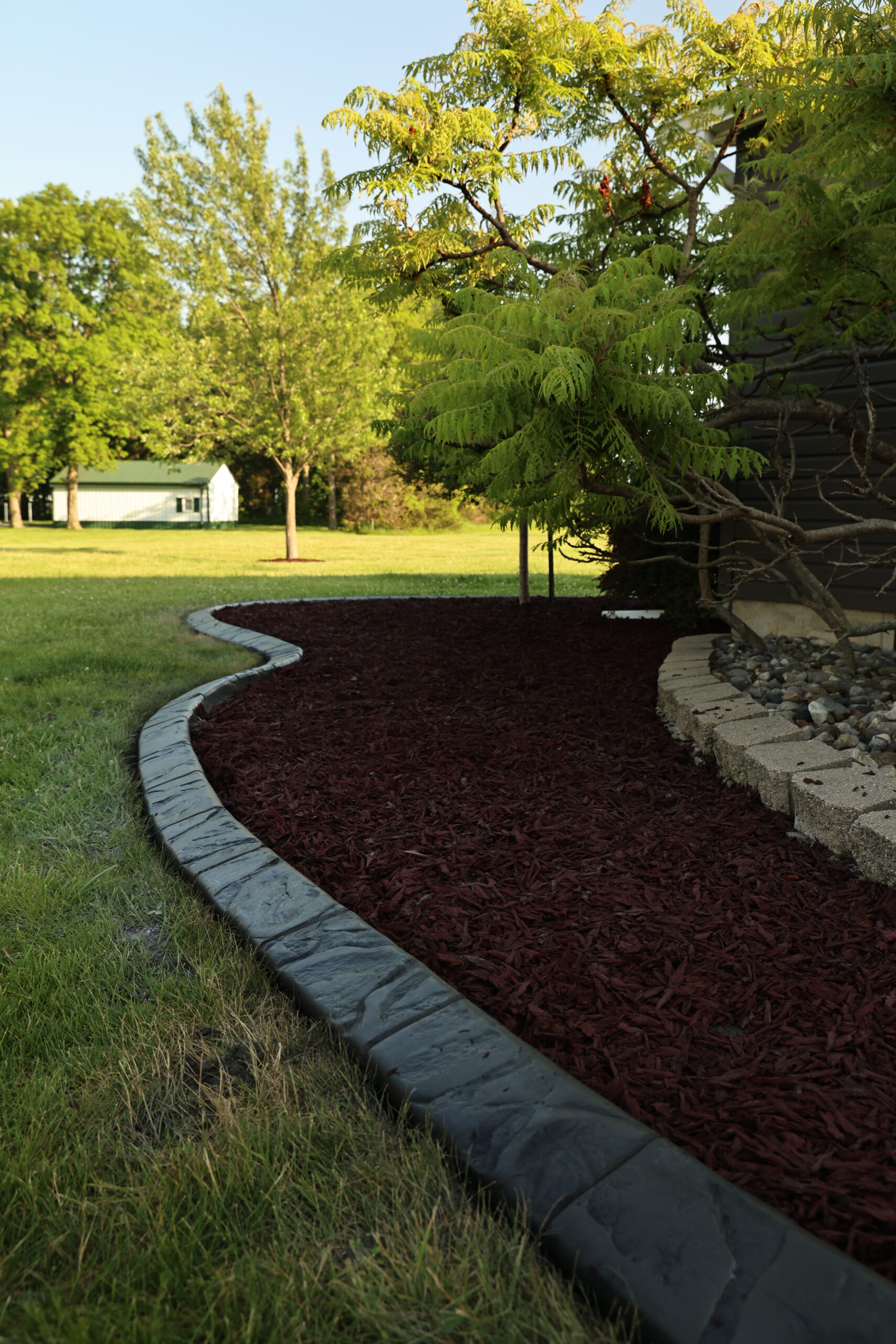
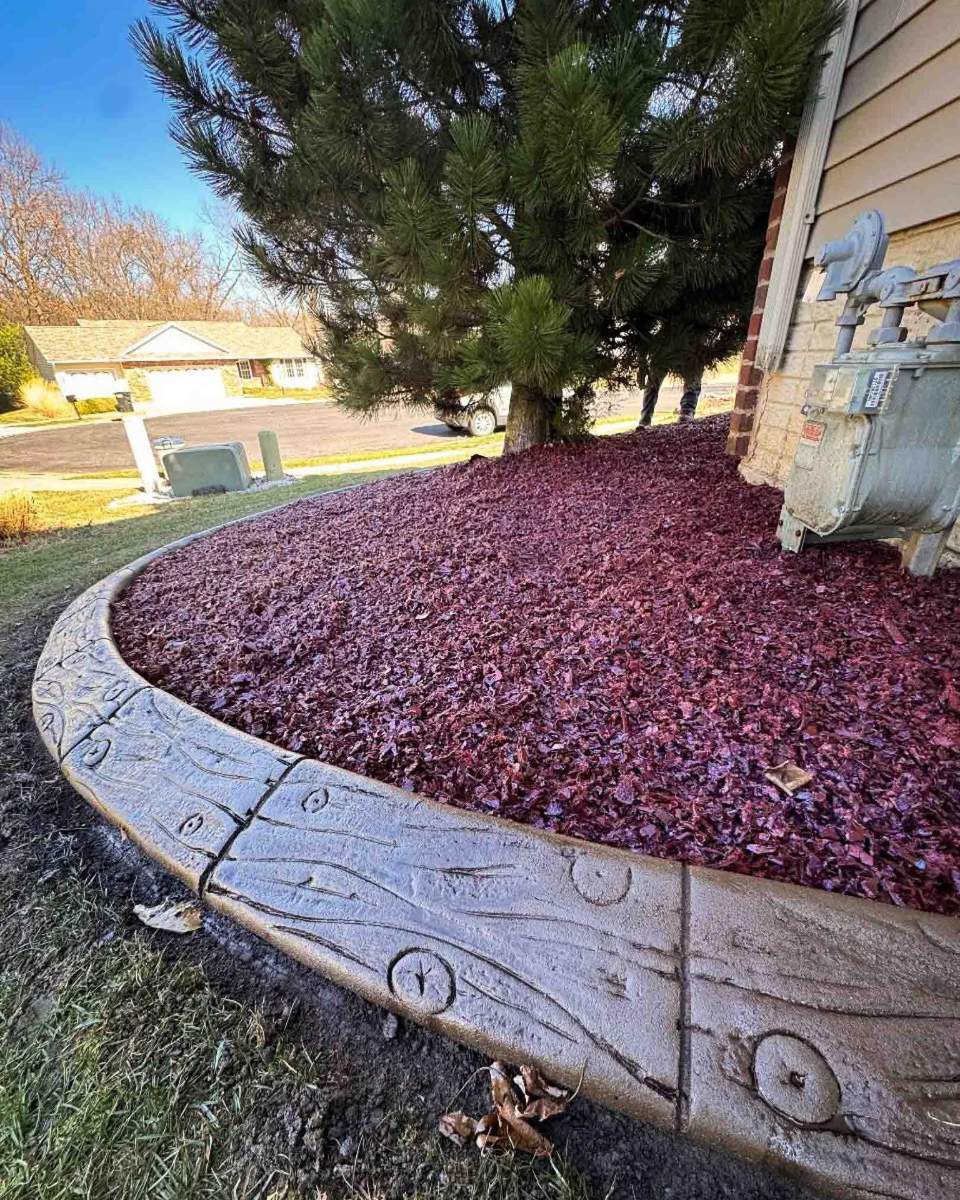
Decorative concrete edging from AE Landscape Borders comes in multiple patterns like Missouri Flagstone, Fractured Rock, and Slate, plus colors ranging from Sandstone to Charcoal. This means you get the permanence of concrete with the aesthetic appeal of natural stone—something plastic and metal edging simply can’t match.
The initial investment in quality concrete curbing costs more than plastic edging, but you’ll never replace it again. Most homeowners find that eliminating the need for frequent edging replacements makes concrete borders the more economical choice over time. Choosing the right border pattern also depends on your garden layout and the overall style you want to achieve for your outdoor space.
How Long Does Professional Concrete Edging Take to Install?
Most residential properties only need one day for complete installation of decorative concrete borders. Larger projects might require two days, but you’ll have functional edging as soon as the crew finishes—no multi-day waits or complicated preparation.
AE Landscape Borders handles the complications that DIY edging projects create, including working around existing sprinkler systems, tree roots, and underground wires. Their crews have installed borders for hundreds of satisfied homeowners, which shows in the quality of the finished product.
The concrete needs up to 28 days to reach full strength, but you can resume normal yard activities much sooner. This curing process is what gives concrete edging its legendary durability—the same characteristic that makes it last decades longer than plastic or metal alternatives.
Frequently Asked Questions
Can I install plastic edging myself and save money?
You can install plastic edging yourself, but most homeowners end up replacing it every 2-3 years due to cracking, warping, and ground movement. The repeated time and material costs often exceed the one-time investment in professional concrete borders that last a lifetime.
Will concrete edging work in areas with harsh winters?
Yes, decorative concrete edging actually performs better in freeze-thaw conditions than plastic or metal alternatives. The material’s depth and structural integrity prevent the heaving and shifting that plague surface-level edging materials during winter months.
How much does professional concrete curbing cost compared to plastic?
Pricing varies based on your property’s specific layout and the linear footage needed. The best way to understand costs for your landscape is to schedule a free onsite estimate where you can discuss patterns, colors, and exactly what your project requires.
Ready to stop replacing failed plastic edging every few years? Contact AE Landscape Borders today for a free onsite estimate and discover how decorative concrete borders can permanently solve your landscape edging problems while boosting your home’s curb appeal.