

Adding fresh mulch can instantly improve your landscaping’s appearance, but if you’re not careful, you’ll end up burying plant stems and hiding your decorative concrete borders. The key is removing old mulch before adding new layers — a step many homeowners skip that leads to problems down the road.
When mulch piles up year after year, it smothers plant roots, creates ideal conditions for disease, and gradually buries the clean lines of your landscape edging. Here’s how to refresh your beds properly while keeping everything healthy and visible.
Why You Should Remove Old Mulch Before Adding New
Most homeowners think they can simply spread new mulch over the old layer each spring. This creates a thick mat that holds excessive moisture against plant stems, encouraging rot and fungal diseases. Mulch that’s too deep also prevents water from reaching roots effectively.
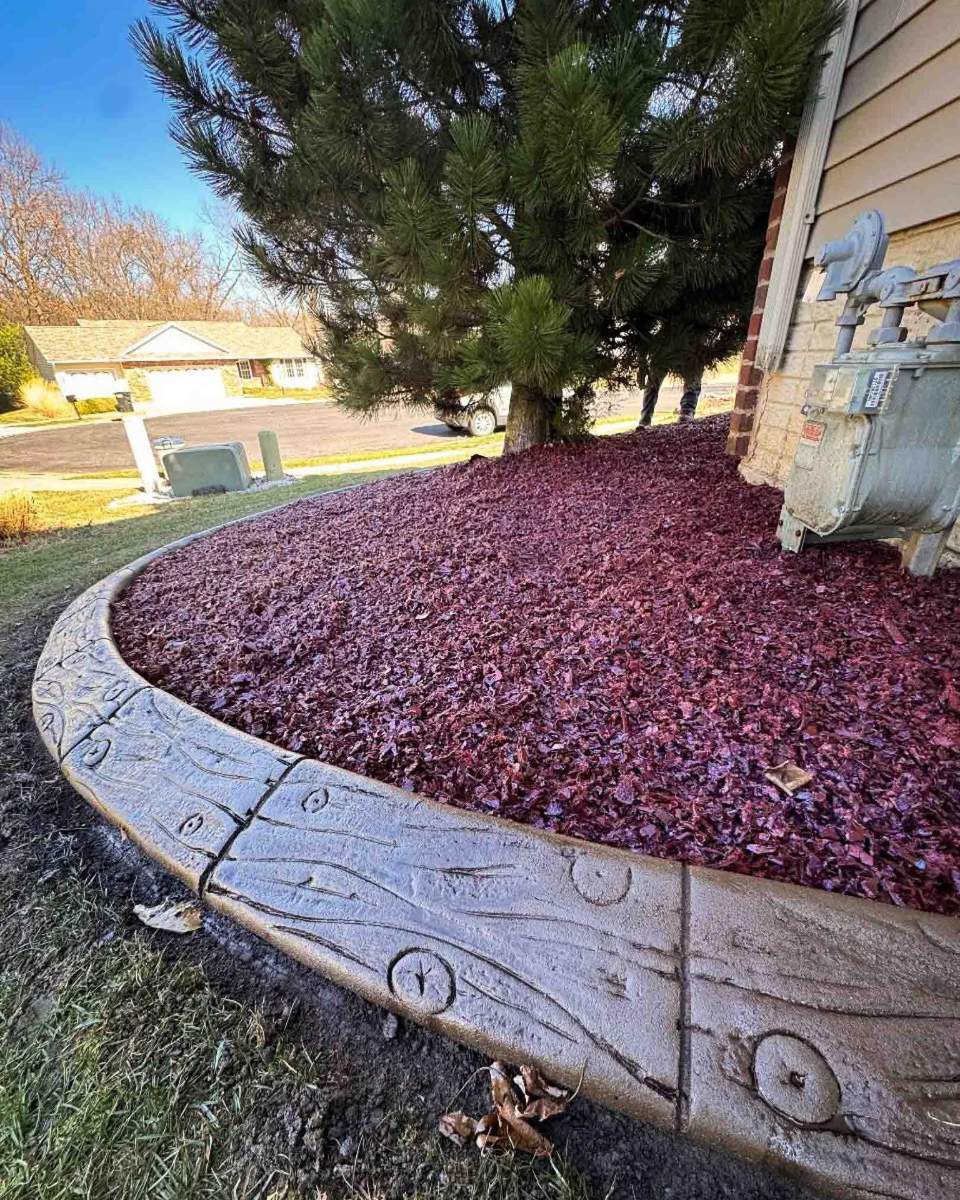
The second problem is that continuous layering slowly raises the soil grade around your plants. Tree bark becomes buried, shrub stems disappear under inches of decomposed material, and eventually your decorative concrete edging from AE Landscape Borders sits several inches below the mulch line — defeating its purpose entirely.
Removing the top 1-2 inches of old mulch before refreshing gives you a clean slate. You’re not adding unnecessary depth, and you’re removing material that’s already broken down and lost its visual appeal.
How Deep Should Mulch Be Around Plants?
The ideal mulch depth is 2-3 inches for most landscaping beds. This provides enough coverage to suppress weeds and retain moisture without suffocating plant roots or creating drainage issues.
Keep mulch pulled back 2-3 inches from tree trunks and plant stems. Direct contact invites pests and diseases. For trees, imagine creating a small donut shape — mulch surrounds the root zone but doesn’t touch the bark.
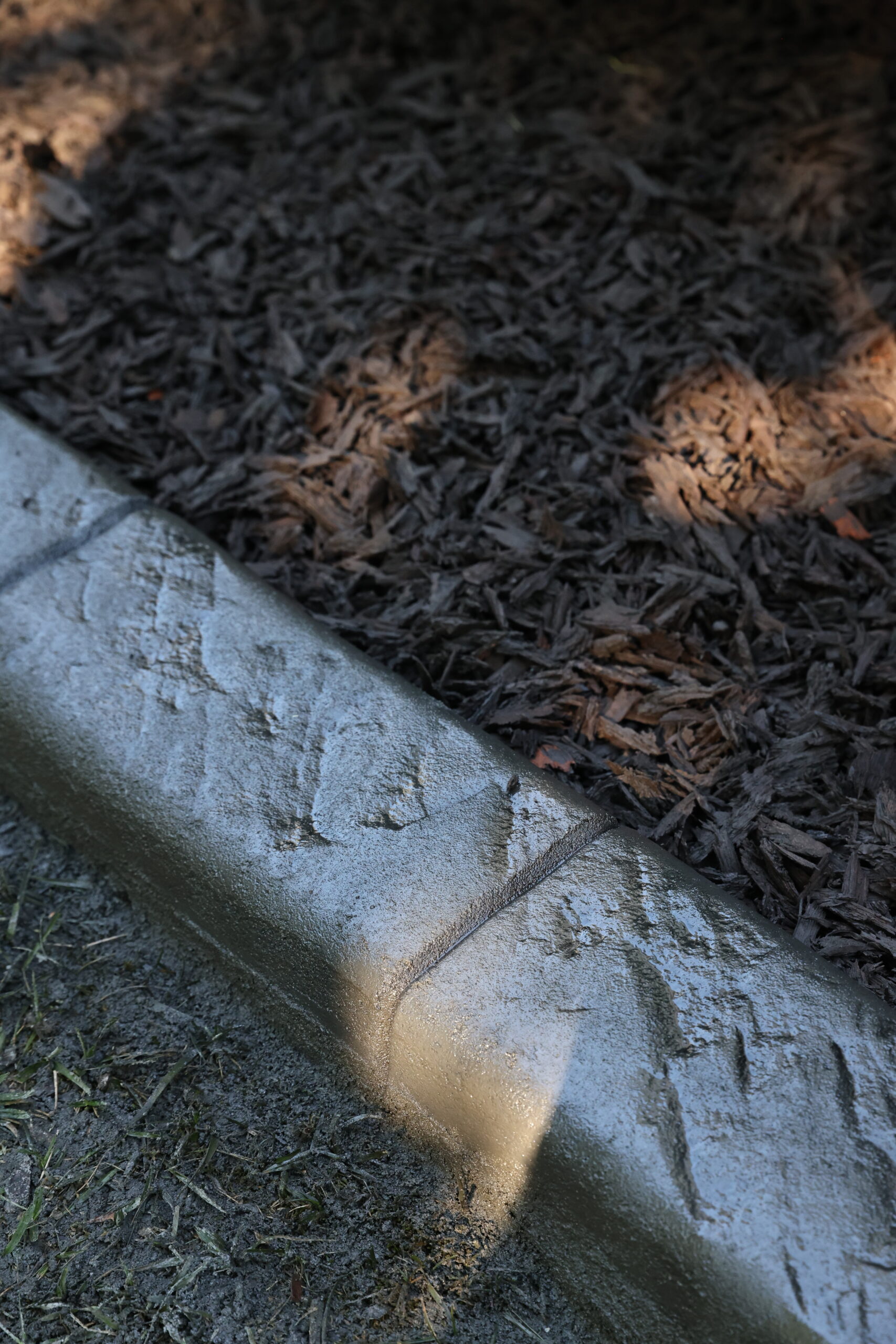
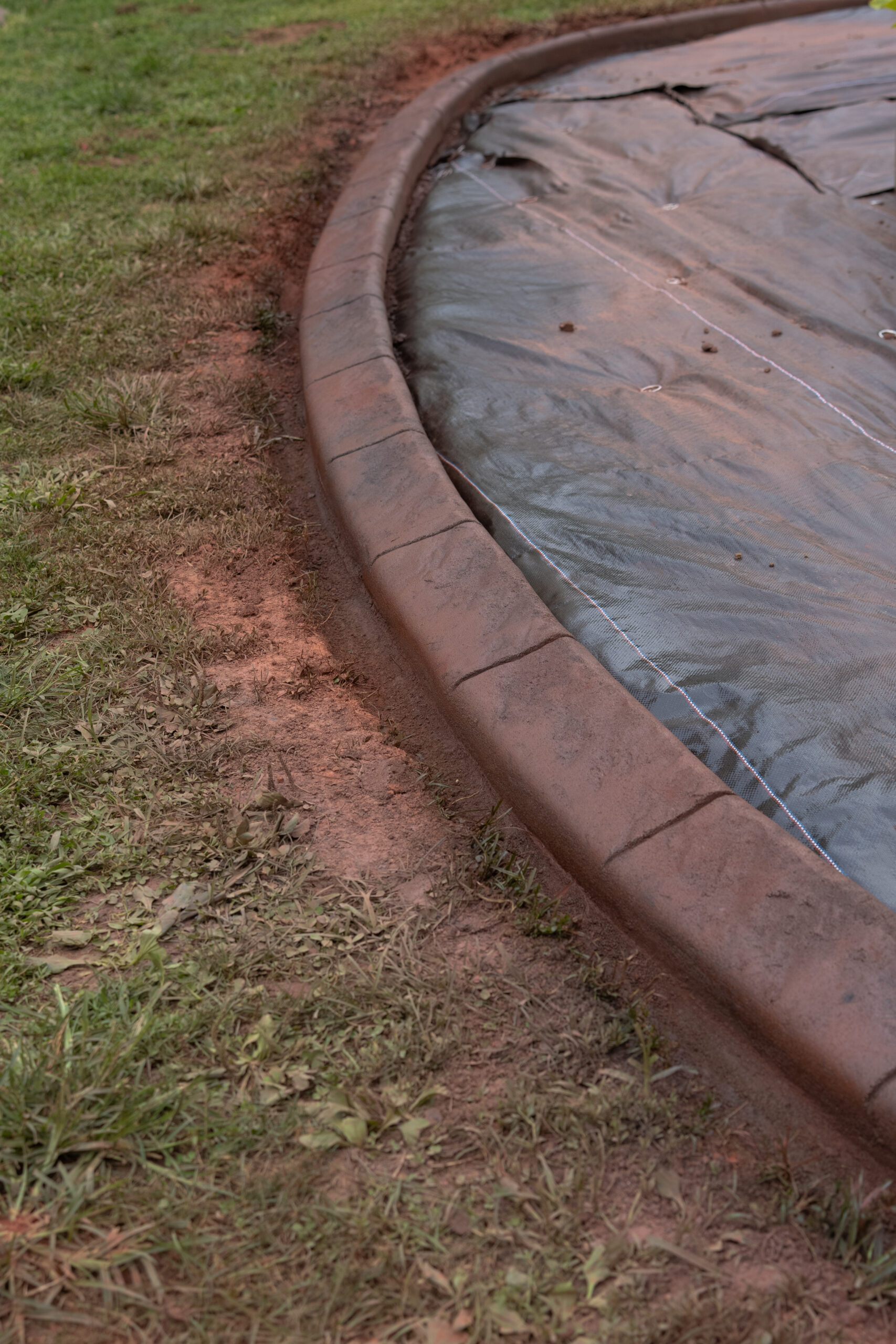
If you have concrete curbing installed by AE Landscape Borders, your mulch should sit just below the top edge of the border. This keeps the decorative pattern visible and prevents mulch from spilling onto your lawn. Proper drainage plays a role in how long your edging lasts, and maintaining appropriate mulch levels helps water flow where it should.
Should You Use Rubber Mulch Instead?
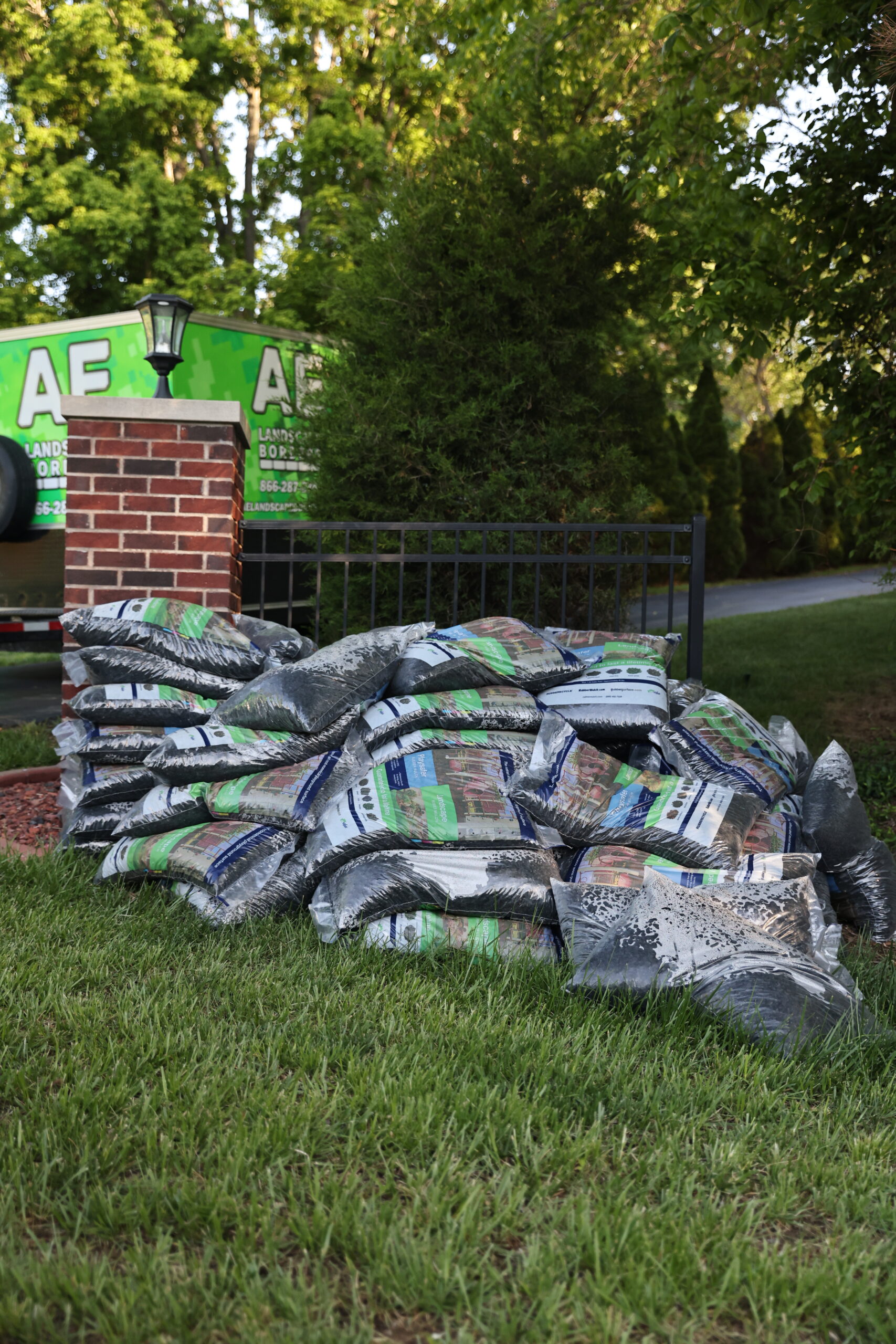
Traditional wood mulch breaks down over time, which is why you’re refreshing it in the first place. Rubber mulch offers a permanent alternative that never needs replacement. AE Landscape Borders offers lifetime-warrantied rubber mulch that won’t decompose, float away during heavy rain, or fade like organic options.
Rubber mulch maintains consistent depth year after year. You won’t accidentally bury plants or borders because the material doesn’t settle or break down. It’s also heavier than wood chips, so it stays in place during storms.
While rubber mulch costs more upfront, you eliminate the annual expense and labor of buying and spreading fresh organic mulch. For beds bordered with decorative concrete edging, rubber mulch creates a permanently clean look without the maintenance cycle.
What’s the Best Way to Remove Old Mulch?
Use a garden rake or pitchfork to pull back the top layer of mulch from around plants. Remove material that’s matted, gray, or significantly decomposed — usually the top 1-2 inches. You can leave the bottom layer if it’s still breaking down into the soil.
Pile the removed mulch in a wheelbarrow or onto a tarp. Some homeowners add it to compost piles. Others use it as fill in low spots around the property. Don’t put diseased plant material in your compost.
Once you’ve cleared space, check that your landscape borders are still visible and clean. Choosing the right border pattern also depends on your garden layout, but any style from AE Landscape Borders should remain the visual anchor of your beds. Brush off any soil or debris from the concrete curbing before adding fresh mulch.
FAQ
How often should I replace mulch?
Wood mulch typically needs refreshing every 1-2 years as it decomposes and fades. Rubber mulch from AE Landscape Borders is a one-time installation with a lifetime warranty — no replacement needed.
Can I just add more mulch without removing the old layer?
You can do this once, but repeated layering creates problems. After 2-3 years of adding mulch without removal, you’ll bury plant crowns and hide your decorative concrete borders. It’s better to remove decomposed mulch before refreshing.
Will concrete landscape edging prevent mulch from washing away?
Yes. Concrete curbing installed by AE Landscape Borders creates a physical barrier that keeps mulch contained during heavy rain. Unlike plastic or metal edging that shifts or degrades, decorative concrete edging maintains its position and effectiveness for decades with a lifetime warranty.
Ready to install landscape borders that stay visible year after year, no matter how you maintain your mulch? Contact AE Landscape Borders today for a free onsite estimate. Their decorative concrete curbing creates lasting definition for your beds while reducing the maintenance hassles of traditional edging materials.