

Quick answer: Installing concrete landscape edging before fall arrives creates a clean barrier between your lawn and garden beds, making leaf removal faster and preventing mulch, soil, and debris from scattering during cleanup. Unlike plastic or metal edging, concrete borders stay firmly in place through wind, rain, and repeated raking, so your yard stays organized all season long.
Key Takeaways:
- Concrete landscape edging creates defined boundaries that stop leaves, mulch, and soil from mixing during fall cleanup
- Permanent edging holds up to seasonal freeze-thaw cycles better than plastic or metal alternatives
- Homeowners searching for reliable landscape edging Bloomington IL can install borders now to prepare for a smoother autumn and winter
Fall cleanup has a way of turning into a weekend-long project. Between raking, bagging, and trying to keep garden beds from blending into the lawn, it’s easy to spend more time fighting your landscaping than enjoying it. If you’ve ever raked a pile of leaves only to watch half of it scatter into your flower beds, you already know the frustration.
This is where permanent edging makes a real difference. A well-installed border does more than mark the edge of a garden bed. It acts as a physical boundary that keeps materials where they belong, cuts down on cleanup time, and protects your landscaping investment through the colder months ahead.
Why does fall cleanup get messier without defined borders?
Without a clear boundary between your lawn and garden beds, leaves, mulch, and soil naturally drift into each other. Raking becomes a back-and-forth process. Every pass pushes debris across loose or undefined edges, and wind undoes a portion of that work before you’ve even finished.
Temporary edging solutions, like plastic strips or staked metal borders, often make this worse over time. They shift with seasonal ground movement, loosen as the soil freezes and thaws, and rarely hold a straight line after a year or two. Once an edge starts to sag, leaves and mulch slip right over it.
How does concrete landscape edging simplify leaf removal?
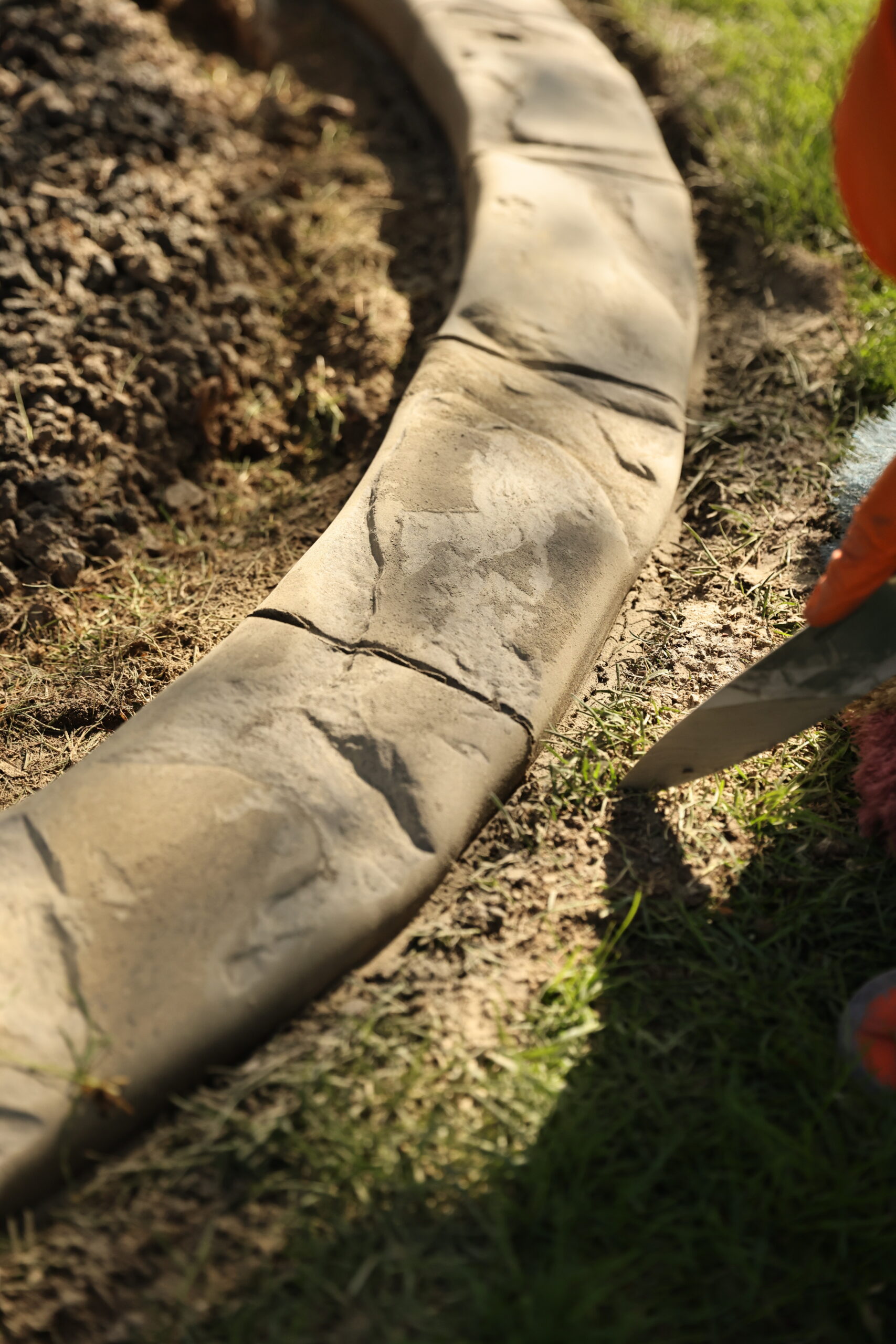
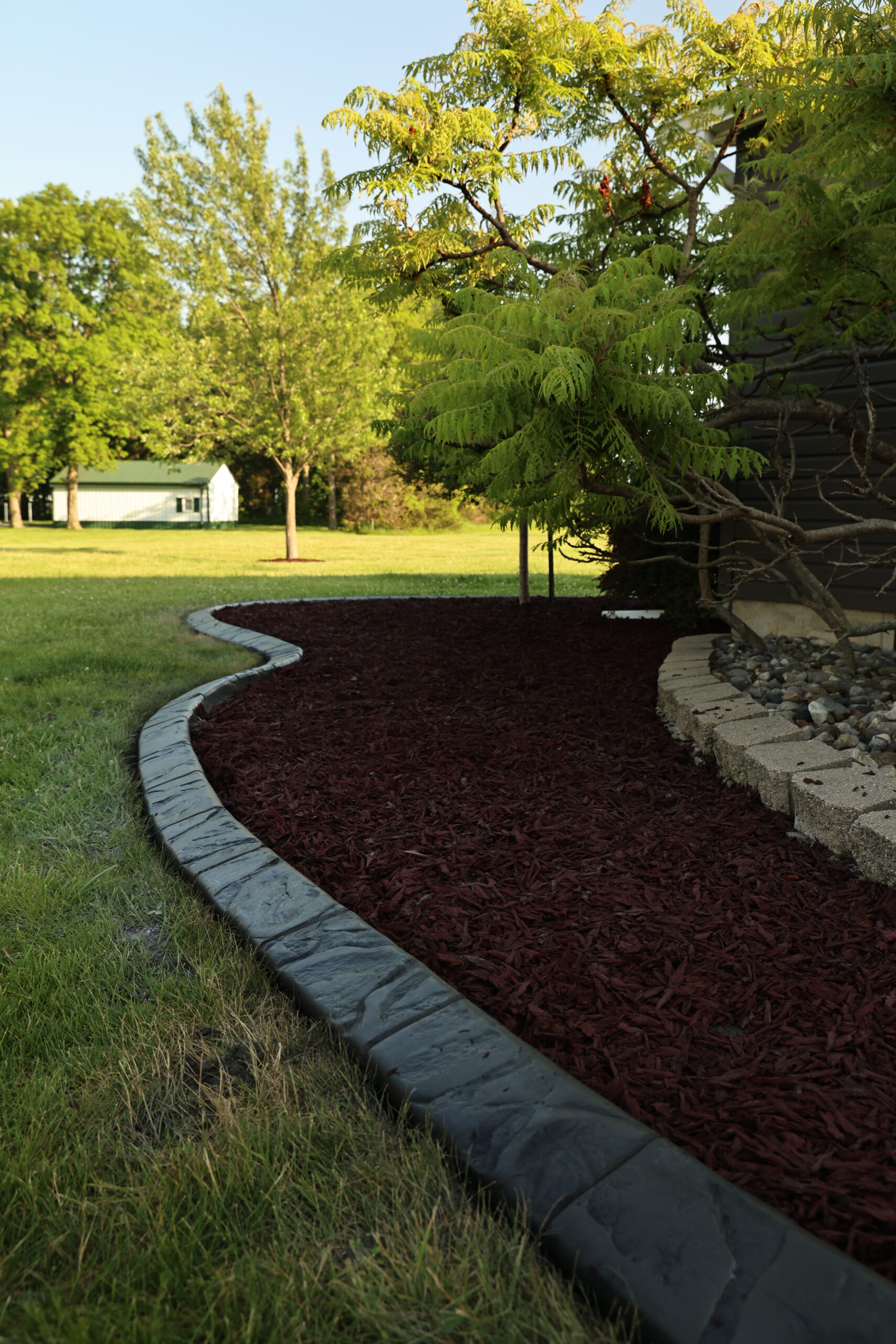
Concrete landscape edging creates a solid, continuous barrier that doesn’t move once it’s set. This matters most during leaf season, when you’re working across the entire yard rather than a single bed.
A few ways permanent edging helps:
- Keeps leaf piles contained. Raked leaves stay within the lawn area, instead of blowing or scattering into mulch beds where they’re harder to remove.
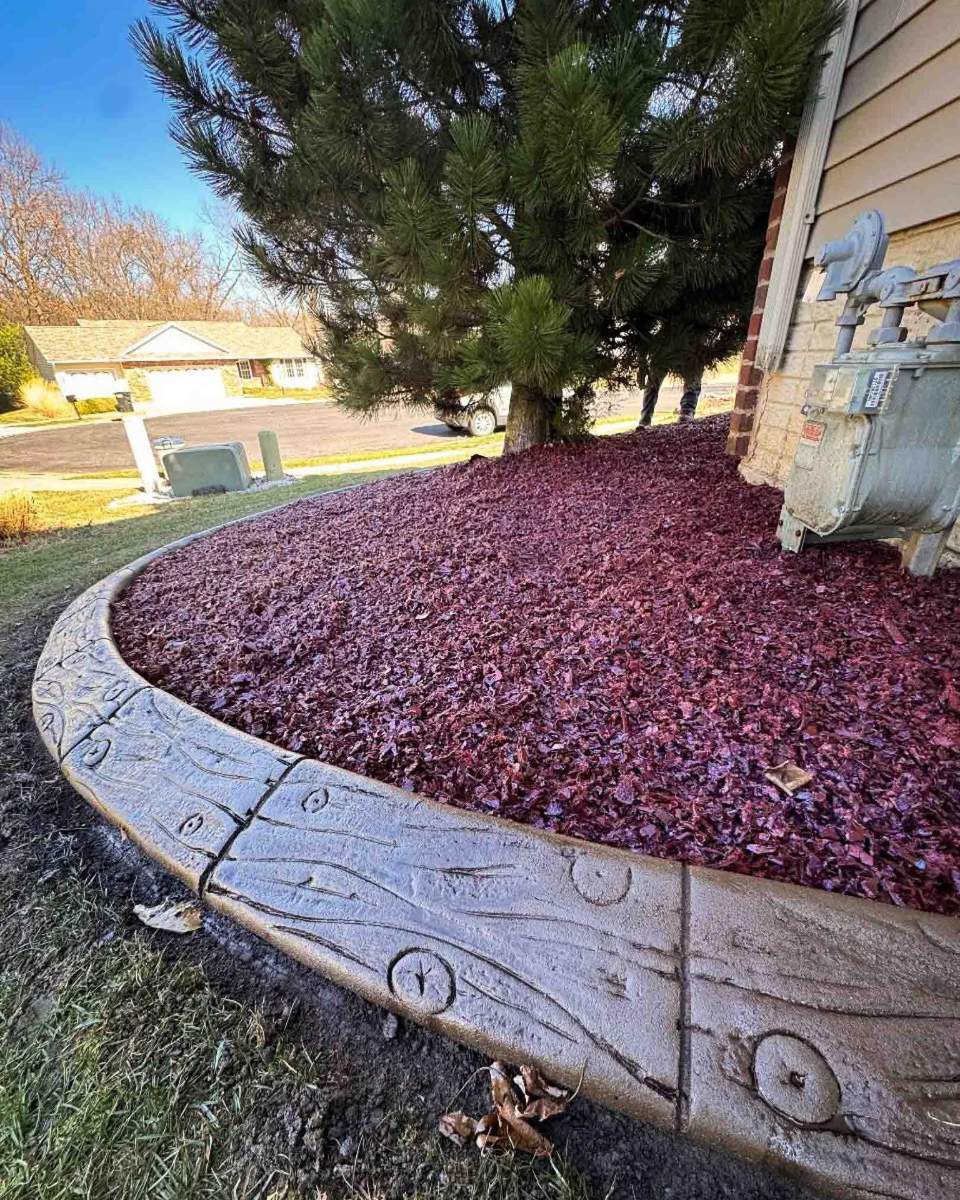
- Protects mulch and soil. A defined border keeps bed materials from migrating onto the lawn, reducing the mess you’ll need to clean up again before winter.
- Reduces repeated raking. With a clear edge, you can rake in straight, efficient passes instead of chasing debris across uneven boundaries.
- Holds its shape through heavy use. Fall cleanup often involves rakes, leaf blowers, and tarps moving across the yard. Concrete borders can take that traffic without shifting.
For homeowners managing larger properties or multiple garden beds, this adds up to real time savings over the course of the season.
Is concrete edging worth it compared to plastic or metal options?
If durability and long-term upkeep matter more than upfront cost, concrete is generally the better choice. Plastic and metal edging are less expensive initially, but they tend to require yearly adjustments, replacement sections, or reinstallation after frost heave pushes them out of alignment.
Concrete edging is poured or set as a continuous, solid structure. It resists the freeze-thaw cycles that cause temporary edging to loosen, and it doesn’t degrade the way plastic can after repeated UV exposure. For homeowners who want to install a border once and stop thinking about it, concrete is the more practical long-term investment.
Choose concrete if you’re tired of replacing edging every couple of seasons. Choose a temporary option only if you’re planning a short-term fix or expect to redesign the bed layout soon.
How does permanent edging prepare your yard for winter?
Fall cleanup isn’t just about appearances. It’s also preparation for the months ahead. Leaves and organic debris left to pile against the base of plants or structures can trap moisture, encourage mold, and create conditions for pests to overwinter.
A solid edge helps direct water runoff away from garden beds and keeps mulch layers even, which protects root systems through freezing temperatures. It also means less work come spring, since beds that stayed well-defined through winter require less reshaping and cleanup when the growing season starts again.
Why is landscape edging Bloomington IL homeowners choose made to handle local conditions?
Central Illinois winters bring a mix of freezing temperatures, snow, and the thaw cycles that are especially hard on temporary edging materials. Borders installed without accounting for these conditions often need repair or replacement by the following spring.
Edging designed and installed for landscape edging Bloomington IL properties takes this climate into account from the start. Properly set concrete borders are built to handle ground movement from freeze-thaw cycles, so they stay intact through winter rather than needing attention every few months.
Get your yard ready before the leaves pile up
Fall is one of the best times to install permanent edging, since it gives your borders a chance to settle before winter and sets you up for an easier cleanup season this year and next. Instead of spending another weekend chasing leaves across your lawn, a defined border can keep things contained from the start.
AE Landscape Borders installs durable concrete landscape edging built to handle the demands of fall cleanup and the freeze-thaw cycles that follow. If you’re ready to simplify your yard work this season, reach out to discuss a border designed for your property.
Frequently Asked Questions
How much does concrete landscape edging cost compared to plastic edging?
Concrete edging typically costs more upfront than plastic or metal options, but it requires little to no replacement over time. Plastic edging often needs reinstallation every one to three years, which can make concrete more cost-effective over the life of the landscaping.
How long does it take to install permanent landscape edging?
Installation timelines depend on the length and layout of the borders, but most residential projects are completed within one to two days.
Can concrete edging be installed in the fall before winter sets in?
Yes. Fall is a practical time to install concrete edging, since cooler temperatures allow it to cure properly before the ground freezes, and it will be ready to handle leaf cleanup right away.
Does permanent edging work with existing garden beds, or does it require redesigning the layout?
Permanent edging can typically be installed around existing garden beds without major changes to the layout. It simply defines the boundary that’s already there.
What’s the main alternative to concrete landscape edging?
The most common alternatives are plastic strip edging and metal edging. Both cost less initially but are more prone to shifting, cracking, or requiring replacement after a few seasons.