

If you’re planning to add decorative concrete borders to your landscaping beds, timing matters — and the short answer is that you should always install your concrete curbing before mulching. Installing borders first creates a clean, defined edge that makes mulching faster, easier, and far more professional-looking.
Here’s why the installation order matters and what homeowners need to know when planning their landscaping project.
Why Install Decorative Concrete Borders Before Mulching?
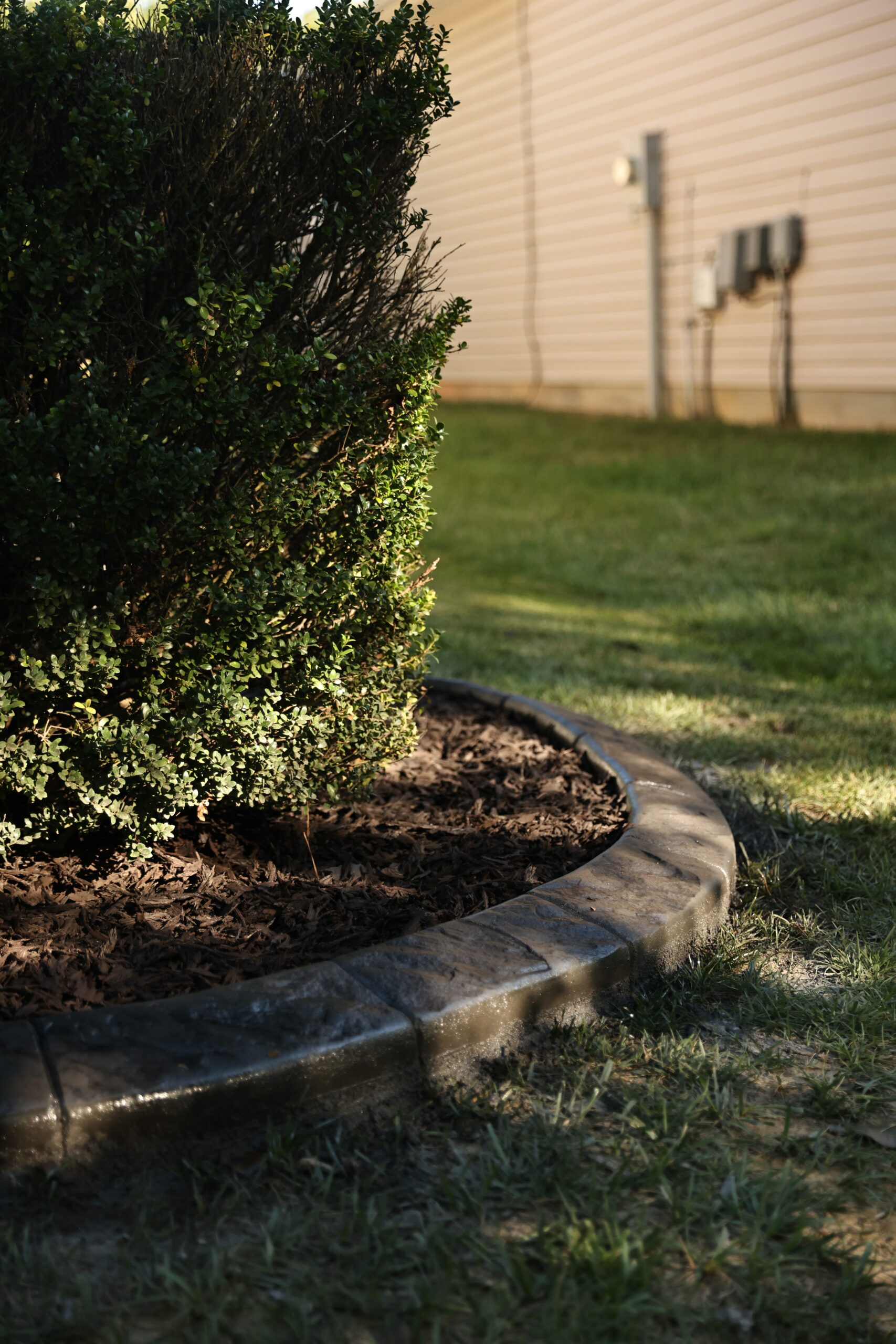
Professional installers, including AE Landscape Borders, always recommend installing your concrete edging before adding or refreshing mulch. The border creates a physical barrier that contains the mulch and prevents it from spilling into your lawn or walkways.
When you install curbing first, you establish the exact boundaries of your beds. This means you know precisely where to spread mulch without guessing or creating uneven edges. The curbing also elevates slightly above ground level, which keeps mulch in place during heavy rains and prevents washout.
If you mulch first and then try to install borders, you’ll face several problems. The installation crew will need to disturb the mulch to dig the trench for the curbing, creating a mess. You’ll waste mulch that gets mixed with soil or pushed aside. And you’ll likely need to purchase additional mulch afterward to refill areas that were disrupted during installation.
How Does the Installation Process Work?
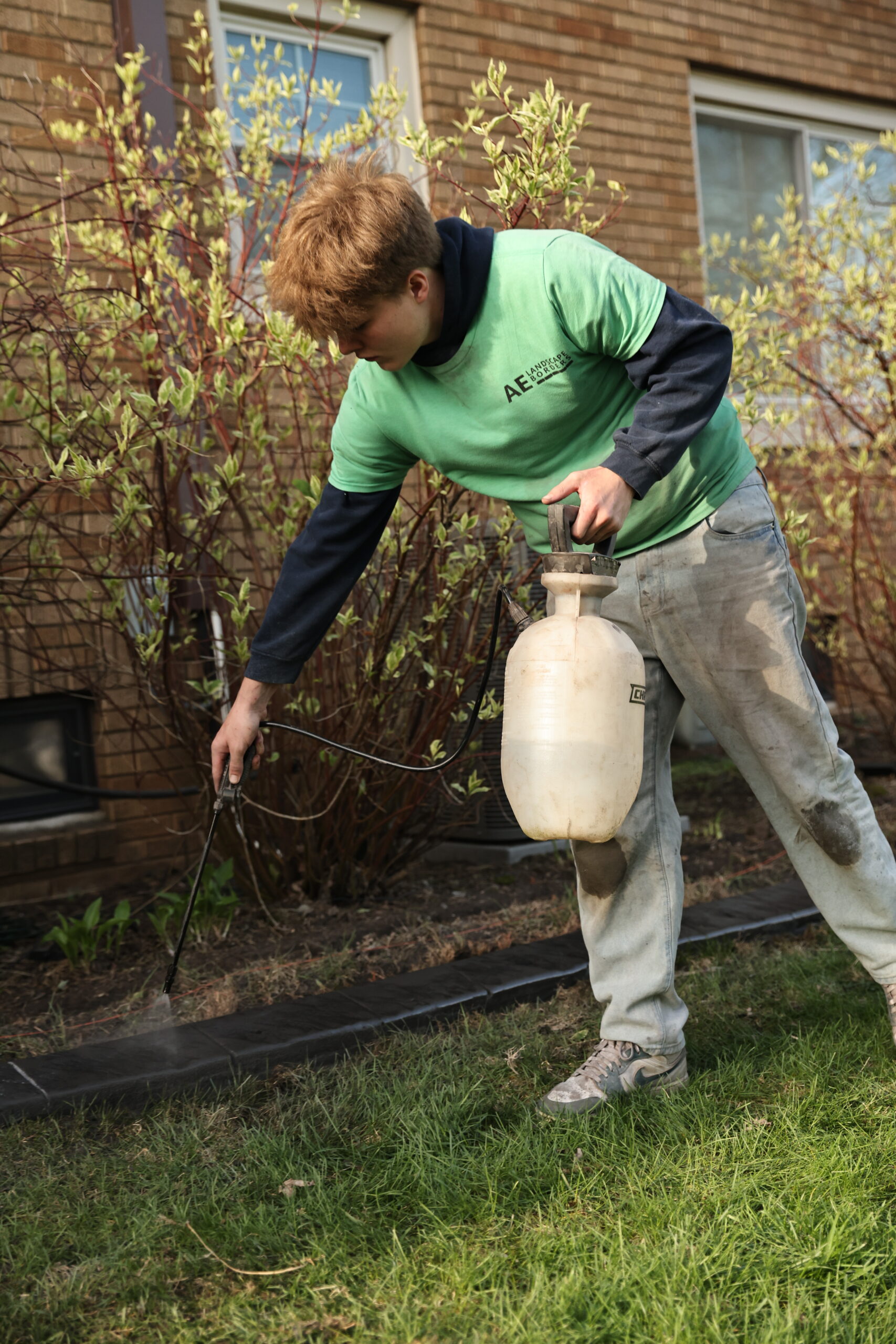
When AE Landscape Borders installs decorative concrete edging, the crew digs a small trench along the bed line to create a stable foundation for the curbing. This process naturally moves soil and disturbs the ground surface along the border line.
Most residential installations take just one day, with larger projects requiring two days. Once the concrete is poured and shaped into your selected pattern, it needs time to cure — the surface is walkable within hours, but full curing takes up to 28 days.
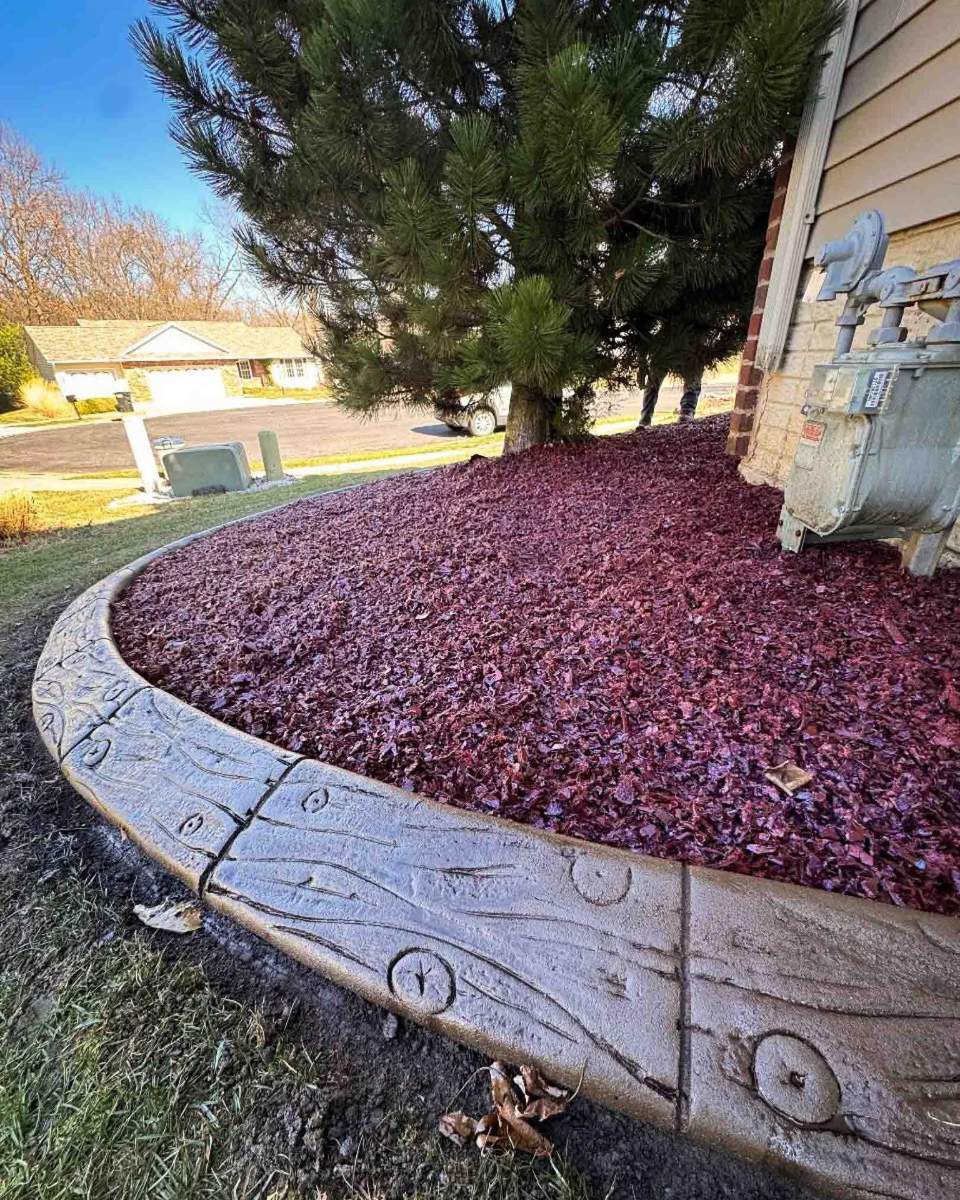
After the borders are installed and have set sufficiently, you can mulch right up to the edge. The defined border makes spreading mulch straightforward, and you’ll use less material overall because you’re not compensating for undefined edges. Choosing the right border pattern also depends on your garden layout and the overall aesthetic you want to achieve.
What If You Already Have Mulch in Your Beds?
If your beds already contain mulch, don’t worry — professional installers work with existing landscaping all the time. The crew will carefully move mulch away from the border line before digging the trench for the curbing.
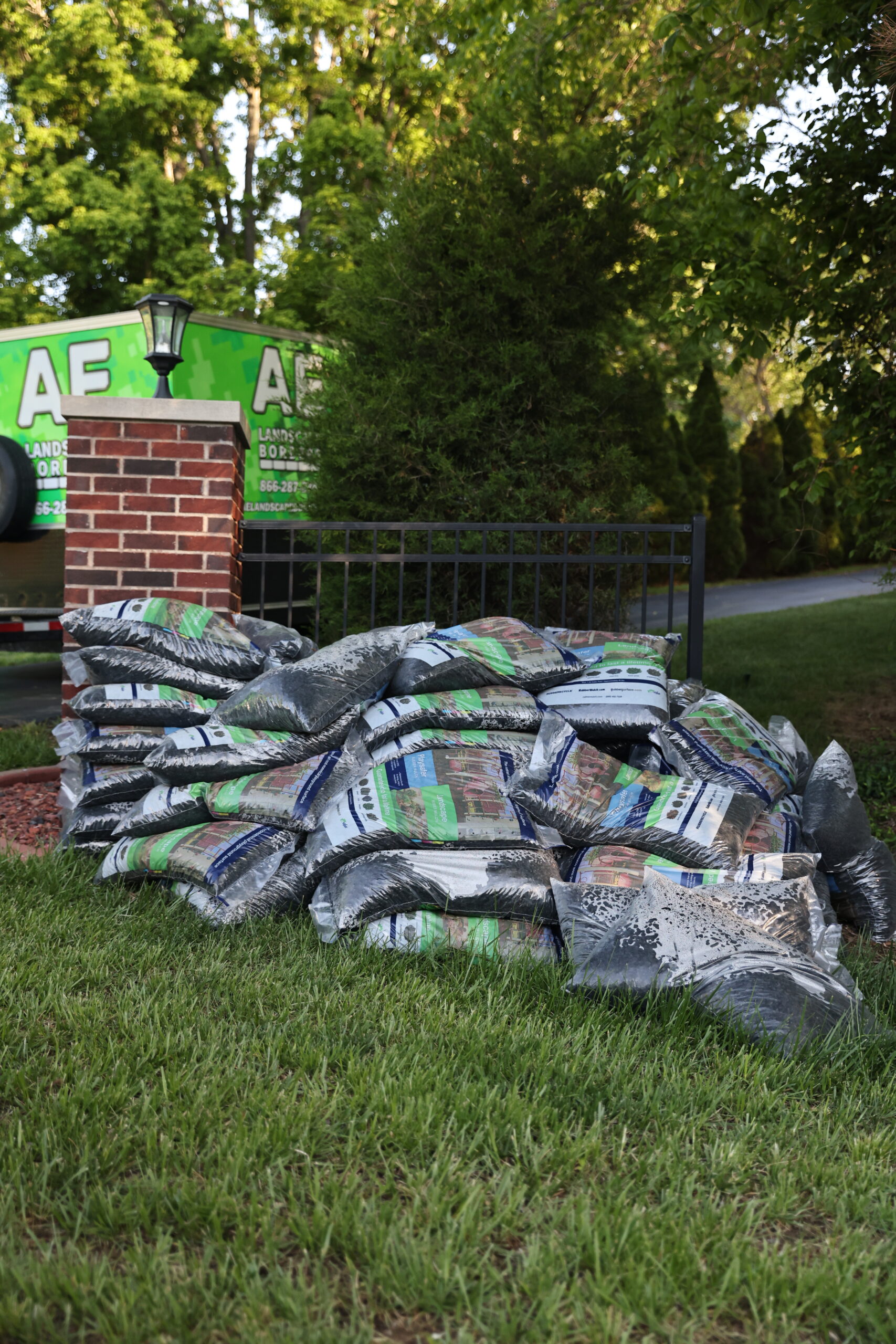
You may need to add a bit of fresh mulch after installation to fill in areas along the new border, but this is a minor expense compared to the long-term benefits. AE Landscape Borders also offers lifetime-warrantied rubber mulch as an add-on, which outlasts traditional wood mulch and never needs replacement.
The key is understanding that some disruption is inevitable when installing borders in already-mulched beds. The final result, however, is worth the temporary inconvenience — you’ll have clean, permanent edges that make future mulching and bed maintenance significantly easier.
Can You Install Borders and Mulch on the Same Day?
In most cases, you should wait at least a few hours after border installation before adding mulch. While the concrete surface sets relatively quickly, you want to avoid disturbing the edges or accidentally kicking mulch onto wet concrete.
Many homeowners choose to have their decorative concrete borders installed one day and schedule mulching for a day or two later. This gives the curbing time to set properly and ensures a cleaner installation. Some prefer to wait until the borders have fully cured, though this isn’t strictly necessary for adding mulch.
Talk with your installer about timing. AE Landscape Borders can advise on the best schedule based on your specific project, weather conditions, and how quickly you want the finished result.
Frequently Asked Questions
How much mulch do I need after installing borders?
Calculate your bed square footage and aim for a 2-3 inch mulch depth. Decorative concrete edging creates precise measurements, making it easier to estimate accurately. Your installer can help you calculate the amount needed based on your newly defined bed areas.
Will installing borders damage existing plants?
Professional installers take care to protect existing landscaping. AE Landscape Borders routinely works around sprinklers, tree roots, and underground wires. If plants are very close to where the border will go, discuss placement with your installer beforehand.
Do I need to remove old mulch before installing borders?
Not necessarily. The installer will move mulch away from the border line as needed during installation. However, if your mulch is very old, compacted, or diseased, you might want to remove and replace it entirely while you’re upgrading your landscaping.
Ready to install decorative concrete borders that will make your landscaping maintenance easier for decades to come? Contact AE Landscape Borders today for a free onsite estimate. Their team serves homeowners across the Midwest and Southeast with professional installation backed by a lifetime warranty.