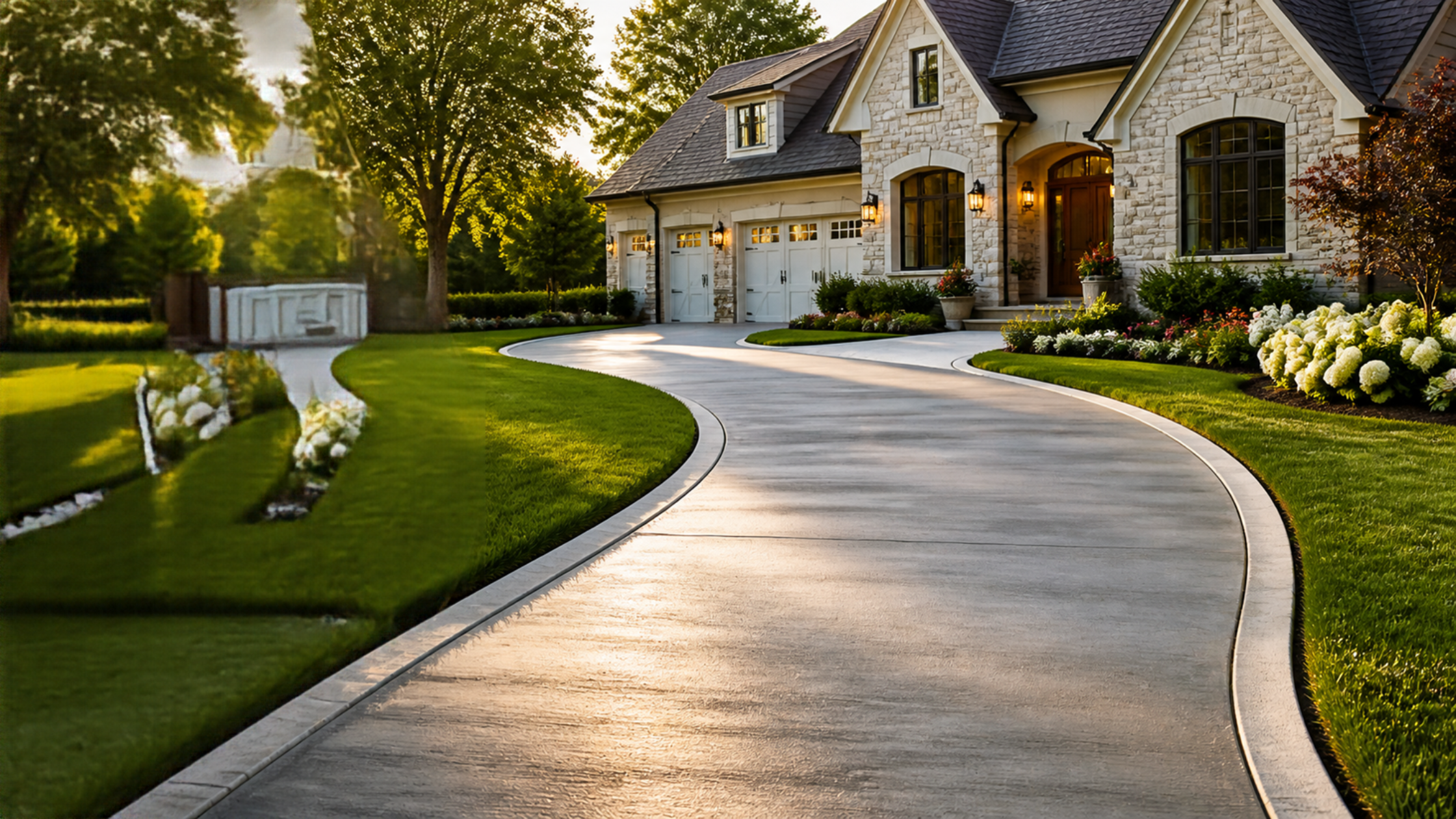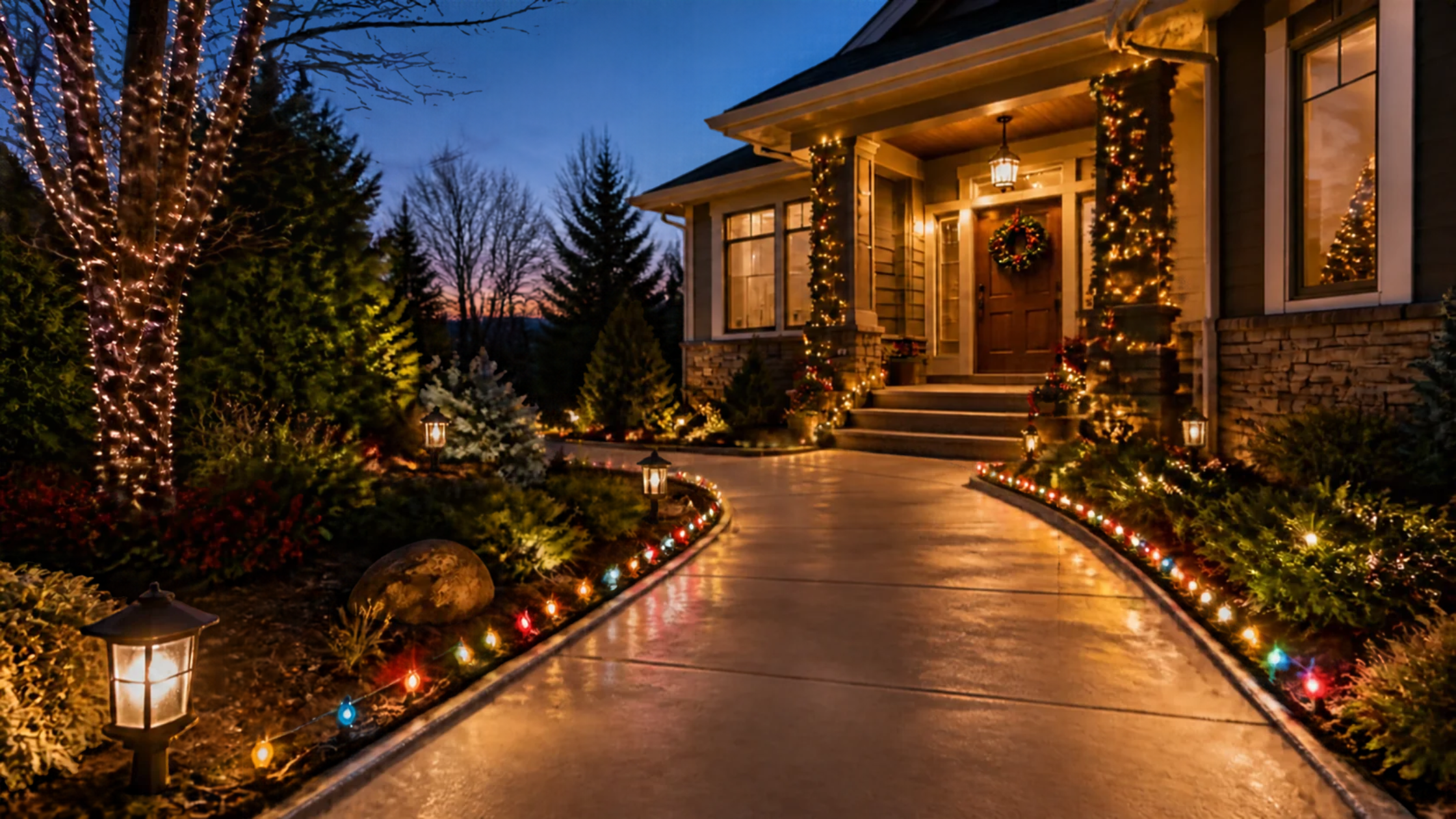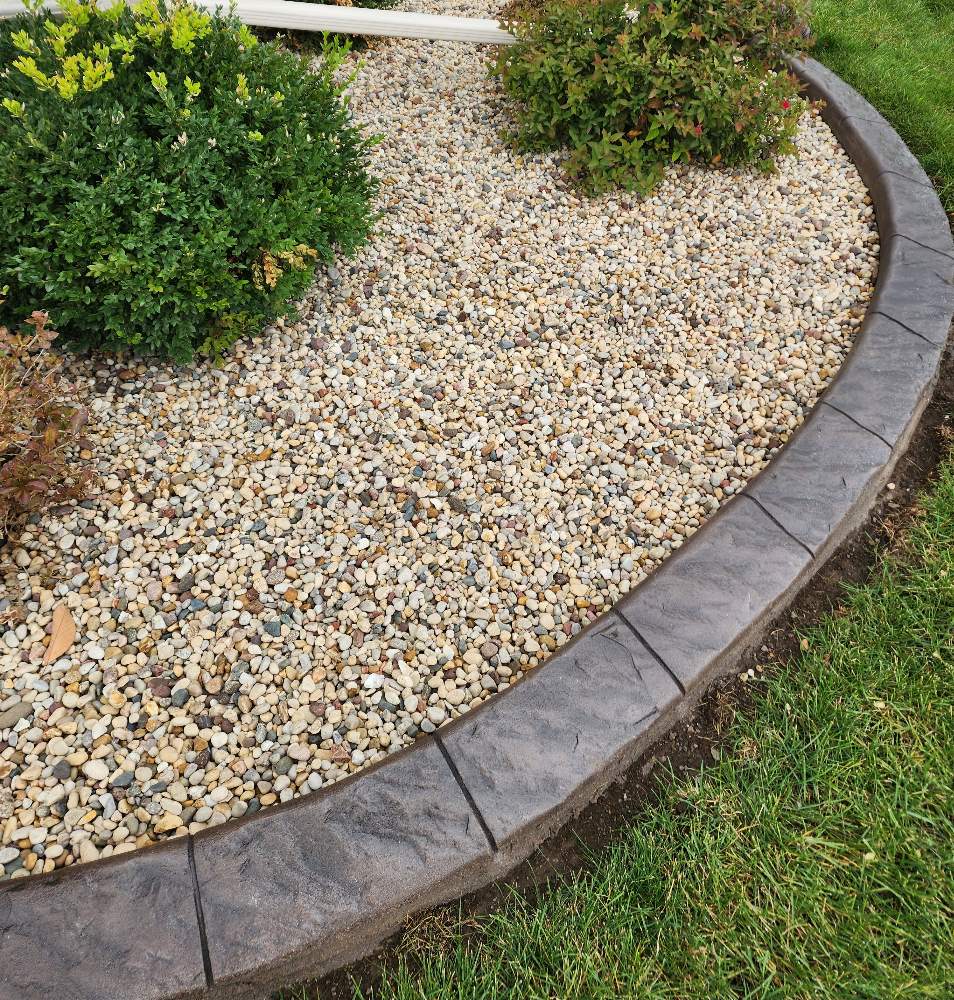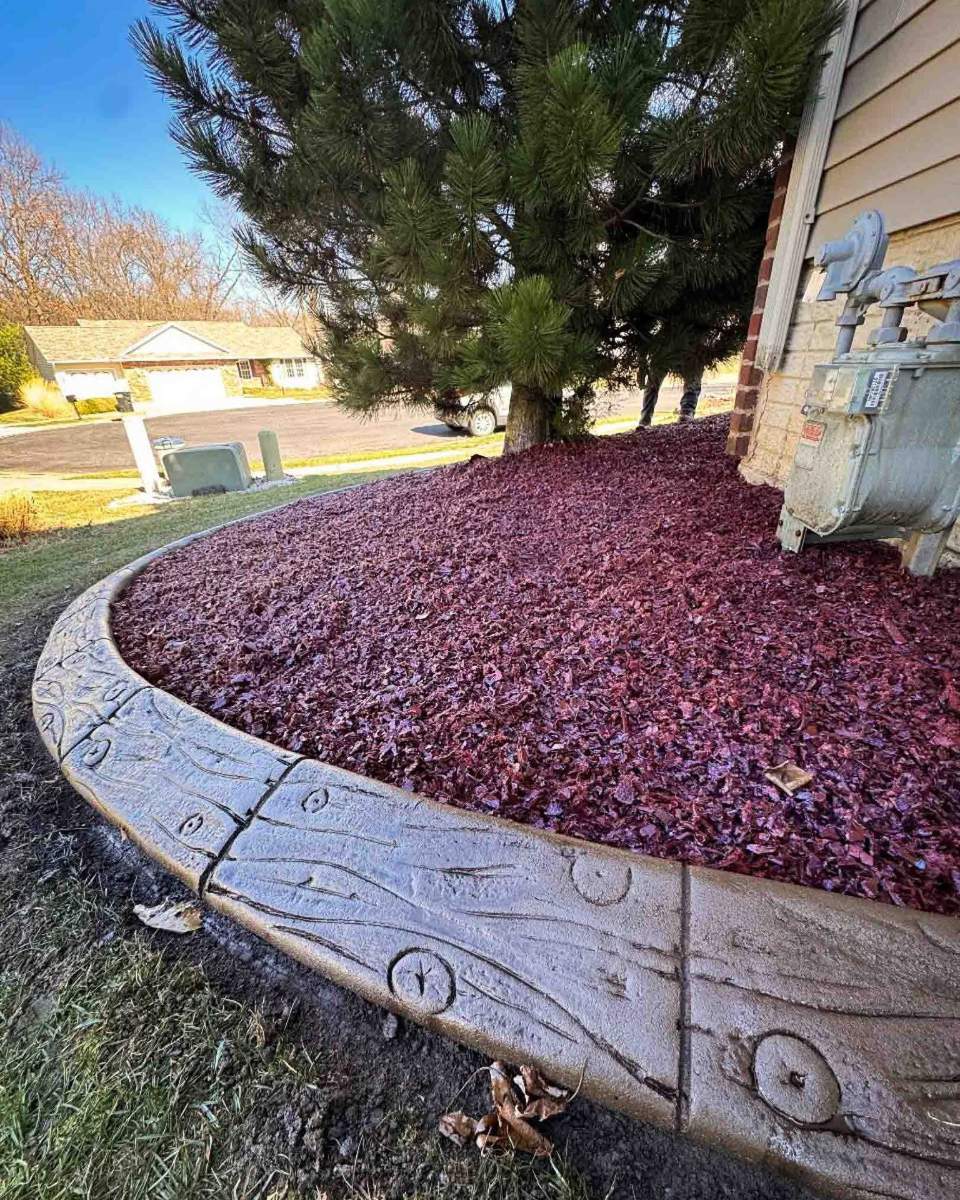


Quick answer: Properly installed concrete landscape borders resist Midwest freeze-thaw damage by relying on a compacted gravel base, control joints, and quality concrete mix design. These elements let the material flex slightly and drain moisture instead of cracking under repeated freezing and thawing. For homeowners researching landscape edging Lena IL, choosing a contractor who understands local soil and climate conditions makes the biggest difference in long-term durability.
Key Takeaways
- Freeze-thaw cycles cause the most damage to landscape edging when moisture gets trapped beneath or inside the material, so proper drainage and base prep matter more than the edging material itself.
- Concrete landscape borders installed with a compacted base, control joints, and air-entrained concrete can last decades in northern Illinois’s harsh winters.
- Local expertise in landscape edging Lena IL conditions helps homeowners avoid common installation mistakes that lead to premature cracking and heaving.
Winter in northern Illinois doesn’t just bring snow — it brings a relentless cycle of freezing nights and thawing afternoons that can wreak havoc on anything installed in the ground. Driveways crack. Sidewalks heave. And landscape borders, if installed incorrectly, crumble within a few seasons. If you’ve ever wondered why your neighbor’s edging looks pristine after ten winters while yours fell apart in three, the answer usually comes down to how well the material was prepared to handle freeze-thaw stress.
This is where concrete landscape borders earn their reputation. Unlike plastic or loosely set stone edging, properly poured concrete can be engineered to withstand the expansion and contraction that defines a Midwest winter. But “properly poured” is doing a lot of work in that sentence. The technique matters just as much as the material.
This post breaks down exactly what happens to landscape edging during freeze-thaw cycles, why concrete performs well when installed correctly, and what to look for when hiring someone for landscape edging Lena IL projects.
What Actually Happens During a Freeze-Thaw Cycle?
Water expands by roughly 9% when it freezes. When moisture seeps into soil, gravel, or porous materials and then freezes, that expansion pushes against whatever surrounds it. As temperatures rise during the day, the ice melts and the ground settles again. Repeat this dozens of times each winter, and you get a slow but powerful force working against anything installed in the ground.
Northern Illinois typically experiences more than 100 freeze-thaw cycles each year, according to regional climate data from the Midwestern Regional Climate Center. That’s a significant number of opportunities for poorly installed edging to shift, crack, or heave out of place.
Why Do Some Landscape Borders Fail While Others Last Decades?
The difference almost always comes down to three factors: base preparation, moisture management, and material quality.
Does the Base Preparation Matter More Than the Material?
Yes — base preparation is often the single biggest factor in how well any edging material performs over time. A well-compacted gravel base beneath concrete landscape borders allows water to drain away instead of pooling and freezing directly under the concrete. Without this layer, water sits beneath the border, freezes, expands, and eventually lifts or cracks the concrete above it.
Contractors experienced with landscape edging Lena IL installations typically excavate below the frost line in key areas and use crushed gravel that compacts tightly, creating a stable, well-draining foundation.
How Do Control Joints Prevent Cracking?
Concrete naturally expands and contracts with temperature changes. Control joints are intentional grooves cut into the concrete at regular intervals that give the material a predictable place to crack, rather than cracking randomly across the surface. Without control joints, a continuous concrete border has nowhere to relieve the stress of expansion and contraction, which often results in unsightly, unpredictable cracks.
Does the Concrete Mix Design Make a Difference?
It does, and this is where many lower-quality installations fall short. Air-entrained concrete contains microscopic air bubbles that give water room to expand internally without damaging the surrounding material. This type of mix is standard for any concrete exposed to freeze-thaw conditions, including driveways, sidewalks, and landscape borders. Choosing a mix without air entrainment for outdoor edging in a climate like northern Illinois significantly raises the risk of surface scaling and cracking within just a few winters.
Concrete vs. Other Landscape Edging Materials: Which Holds Up Best?
Homeowners often compare concrete to plastic, metal, or natural stone edging when planning a project. Each material responds differently to freeze-thaw stress:
- Plastic edging is inexpensive but tends to become brittle in cold temperatures and can crack or warp after a few winters.
- Metal edging holds its shape well but can shift or heave if not installed deep enough below the frost line.
- Natural stone looks attractive but individual stones can shift over time as the ground moves beneath them.
- Concrete landscape borders, when poured correctly with proper base prep and control joints, offer the most consistent long-term performance in freeze-thaw climates.
Choose concrete if long-term durability and minimal maintenance matter more than upfront cost. Choose plastic or natural stone if you’re working with a tighter budget and are comfortable with more frequent repairs or replacement.
What Should Homeowners Look for in a Landscape Edging Contractor?
Not every contractor approaches concrete installation the same way, and the quality of the installer matters as much as the quality of the material. When evaluating a company for landscape edging Lena IL projects, ask about:
- Their process for base preparation and compaction
- Whether they use air-entrained concrete rated for the local climate
- How they plan control joint spacing for your specific layout
- Examples of previous installations that have survived multiple winters
A contractor who can answer these questions in detail is far more likely to deliver borders that last.
Protect Your Landscape Investment for the Long Haul
Freeze-thaw cycles aren’t going away in northern Illinois, but failing landscape edging doesn’t have to be an annual headache. With proper base preparation, thoughtful control joint placement, and the right concrete mix, concrete landscape borders can handle decades of Midwest winters without losing their shape or structural integrity.
If you’re planning a new border installation or replacing edging that didn’t survive last winter, AE Landscape Borders specializes in landscape edging Lena IL homeowners can count on through every freeze-thaw season. Reach out to discuss your property and get a plan built for long-term durability.
Frequently Asked Questions
How long do concrete landscape borders typically last in Illinois winters?
When installed with proper base preparation and air-entrained concrete, landscape borders can last 20 years or more, even with frequent freeze-thaw cycles.
What causes landscape edging to crack during winter?
Cracking usually results from trapped moisture freezing beneath or within the material, poor compaction of the base layer, or the absence of control joints to manage natural expansion and contraction.
Is concrete more expensive than plastic or metal edging?
Concrete typically costs more upfront than plastic or metal options, but it requires far less maintenance and replacement over time, often making it more cost-effective long-term.
Can existing cracked landscape edging be repaired, or does it need full replacement?
Minor surface cracks can sometimes be patched, but significant heaving or structural cracking usually indicates a base preparation issue that requires full removal and reinstallation.
Who should consider concrete landscape borders over other materials?
Homeowners who want a long-lasting, low-maintenance edging solution and are willing to invest upfront should consider concrete, especially in climates with frequent freeze-thaw cycles like northern Illinois.