

Quick Answer: Fall winds, rain, and freeze-thaw cycles push mulch out of garden beds and onto lawns and walkways. Concrete landscape edging creates a physical barrier that holds mulch in place, reduces yard cleanup, and keeps garden beds looking sharp all season. For homeowners researching concrete edging Indianapolis IN options, a professionally installed border is one of the most effective long-term fixes.
Key Takeaways
- Loose mulch is a common fall problem caused by wind, rain, and raking, but it’s preventable with the right border.
- Concrete landscape edging creates a permanent, defined boundary that keeps mulch contained without the upkeep plastic or metal edging requires.
- Professionally installed concrete borders save homeowners time on seasonal cleanup and protect lawns, driveways, and walkways from mulch migration.
Every fall, Indianapolis homeowners face the same frustrating cycle: fresh mulch gets spread, looks great for a few weeks, then slowly creeps onto the lawn, driveway, or sidewalk. Wind gusts scatter the lighter pieces, heavy autumn rains wash it toward low points, and raking leaves off garden beds often drags mulch along with it.
This isn’t just a cosmetic issue. Mulch that migrates out of garden beds leaves soil exposed, which means less insulation for plant roots heading into winter and more weeds taking advantage of bare patches come spring. It also means more time spent sweeping, raking, and re-spreading mulch that should have stayed put in the first place.
The good news is that this is a solvable problem. Concrete landscape edging gives garden beds a defined, permanent boundary, so mulch stays exactly where you put it, regardless of what the weather does. Here’s how it works, and why it holds up better than other edging options during Indiana’s unpredictable fall season.
Why Does Mulch Move So Much in the Fall?
Fall is actually one of the toughest seasons for mulch retention. A few factors stack up against your garden beds:
- Stronger wind patterns: Autumn storms and cold fronts bring gusty conditions that can lift and scatter lightweight mulch, especially shredded hardwood or bark varieties.
- Heavy rain events: Fall rainfall tends to come in bursts rather than steady showers, and that runoff carries mulch toward driveways, patios, and lawns.
- Leaf cleanup: Raking and blowing leaves off beds often pulls mulch along with them, especially near bed edges that don’t have a clear boundary.
- Freeze-thaw cycles: As temperatures swing between freezing and thawing, soil expands and contracts, which can gradually push mulch and soil outward over time.
Without a physical barrier, even a well-mulched bed can lose a noticeable amount of coverage by the time winter arrives.
How Does Concrete Edging Keep Mulch Contained?
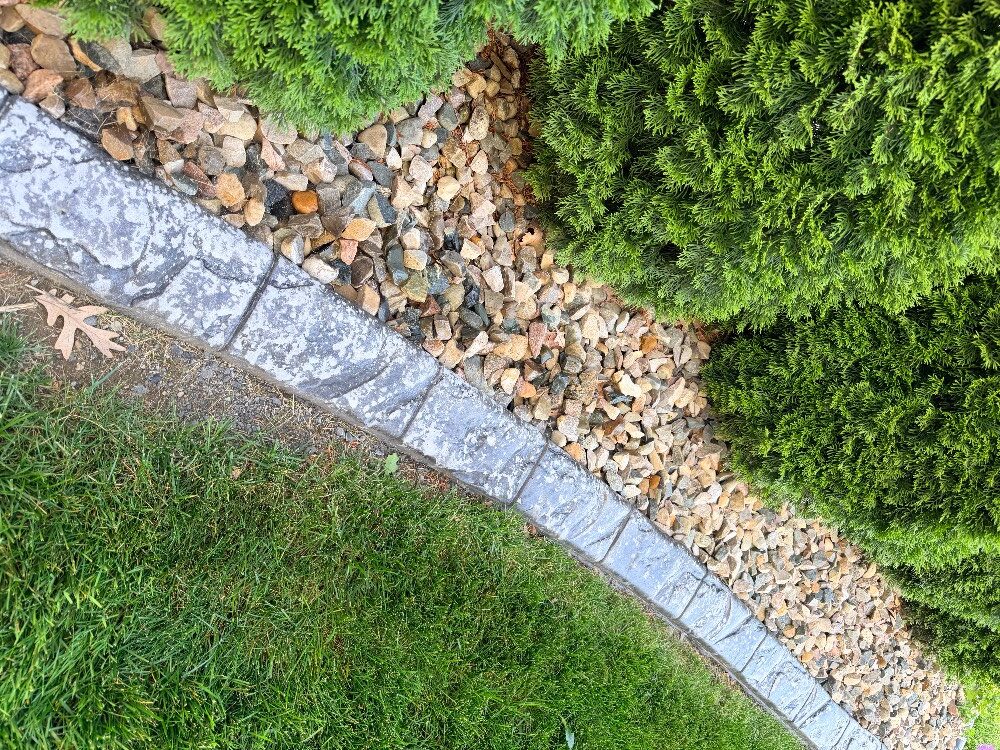
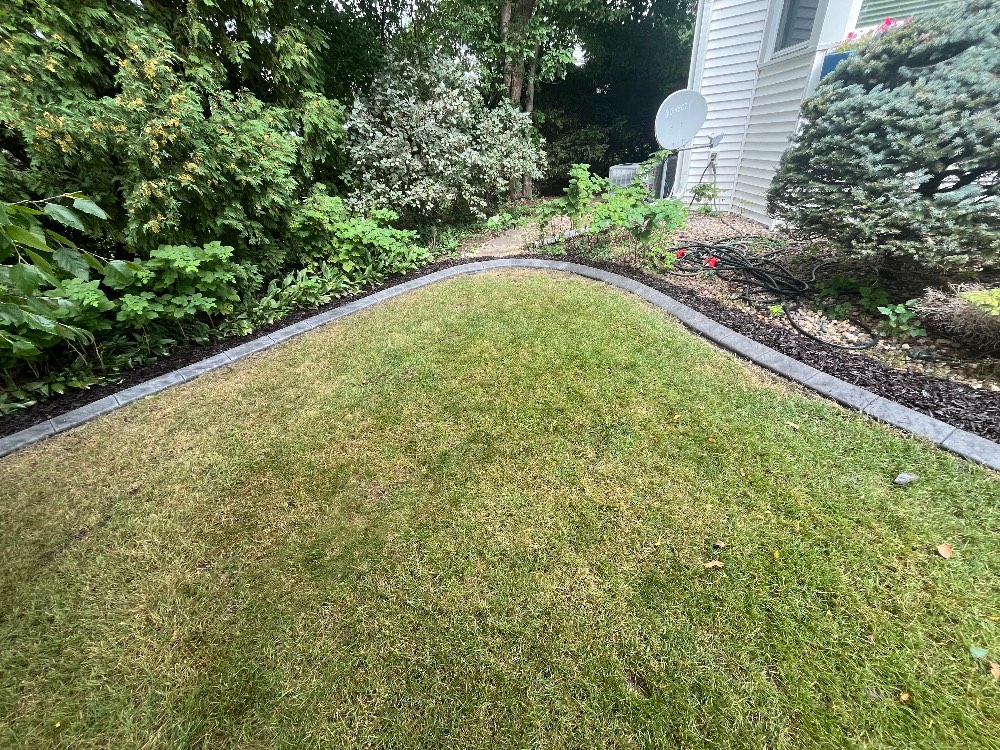
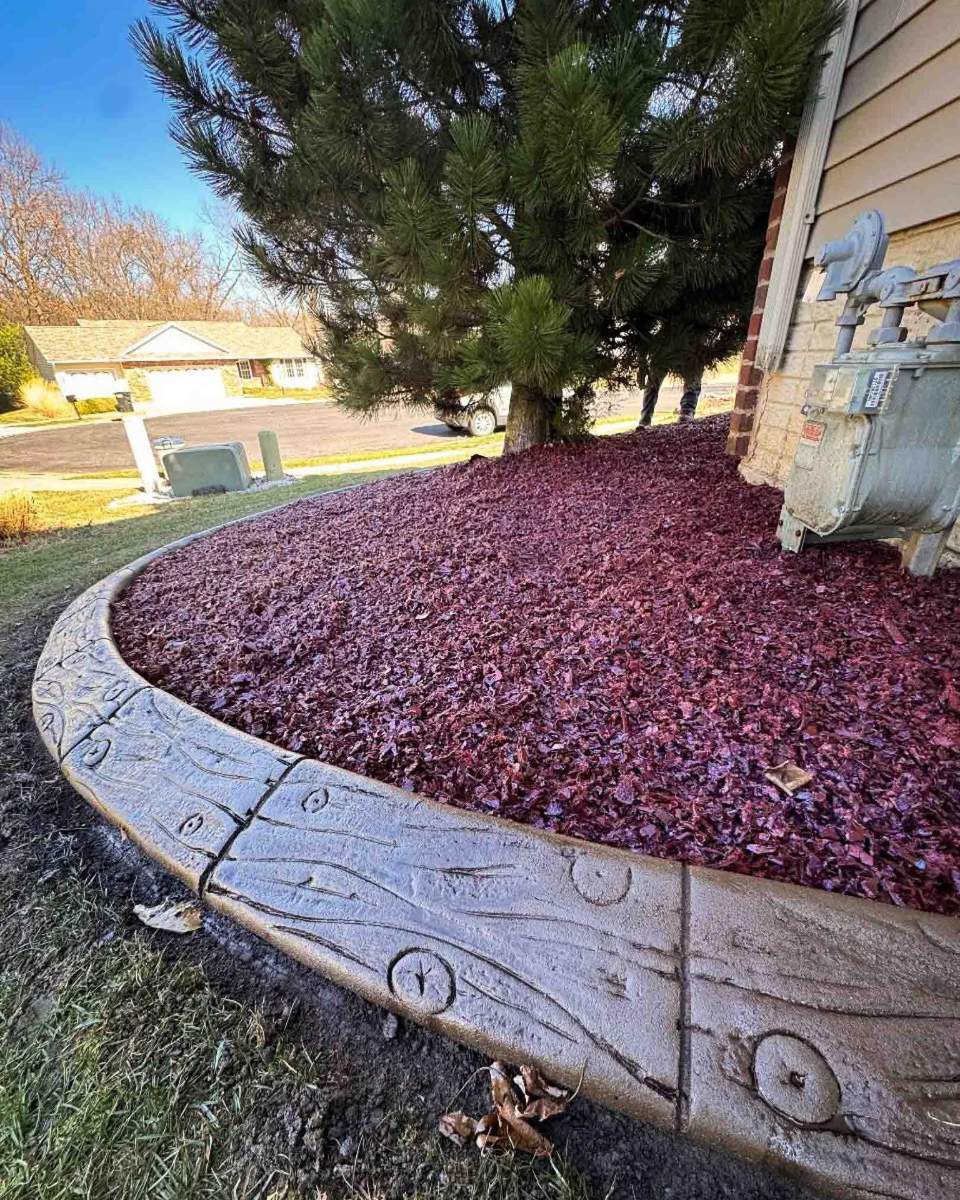
Concrete landscape edging works by creating a solid, continuous border between garden beds and surrounding surfaces like lawns, driveways, or walkways. Unlike mulch that simply tapers off at the edge of a bed, a concrete border gives the mulch something to physically rest against.
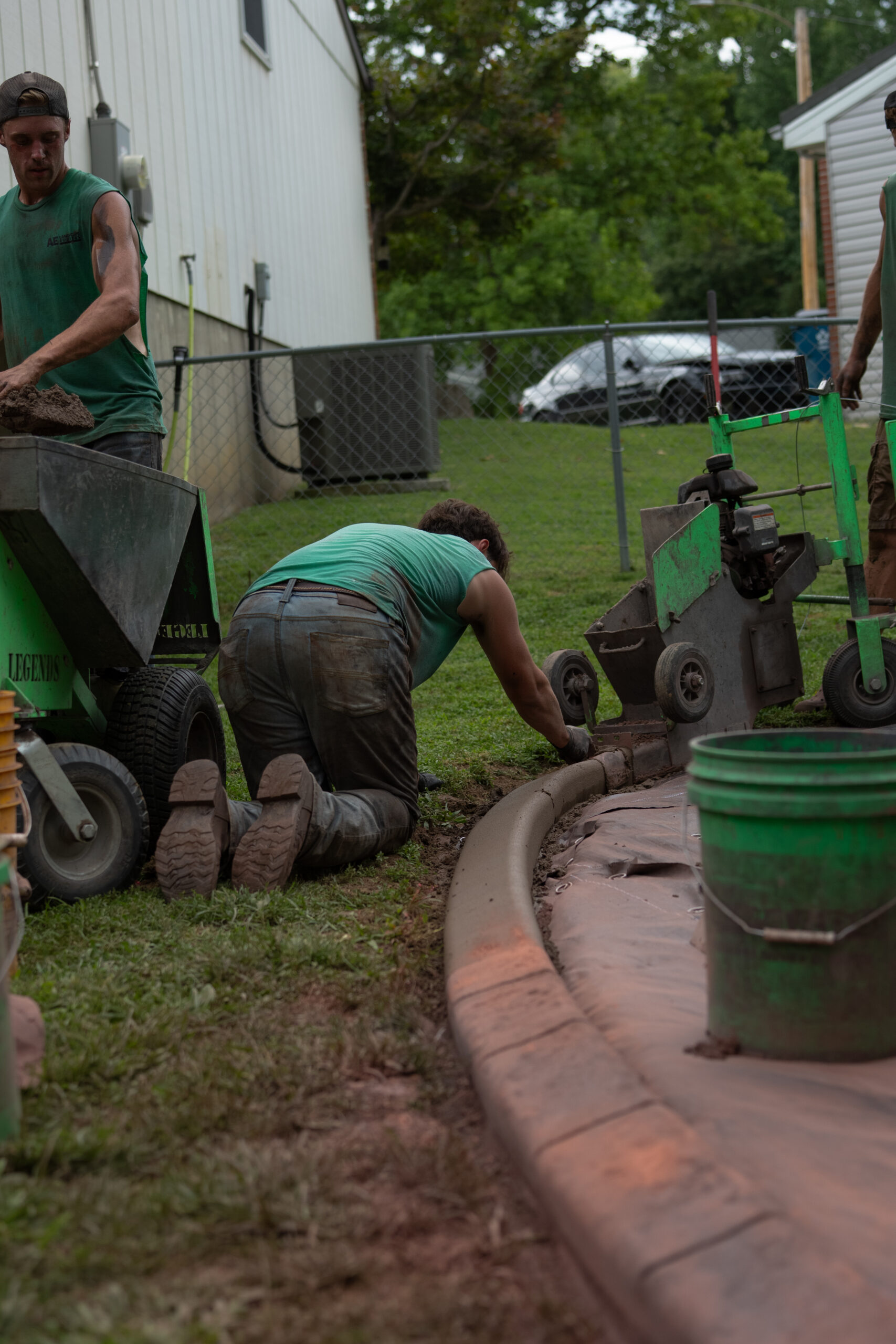
Because concrete edging is poured and set as one continuous piece, it does not have the gaps or shifting seams that come with segmented plastic or paver edging. This continuous design matters most during the exact conditions that cause mulch loss: heavy rain, wind, and freeze-thaw movement. A concrete border stays in place where it was installed, holding its line season after season.
The height and depth of the edging also play a role. A properly installed border sits slightly above grade to contain mulch, while being anchored below ground to resist shifting from frost heave, a common issue in Indiana’s climate.
Concrete Edging vs. Other Mulch Barriers: Which Is Better for Fall?
Homeowners typically consider three main options for containing mulch: plastic edging, paver or brick borders, and concrete edging. Each has tradeoffs worth understanding before fall cleanup season hits.
Choose plastic edging if budget is the top priority and you’re open to replacing or reinstalling it every few years. Plastic is the least expensive option, but it tends to warp, lift, or crack under freeze-thaw pressure, often within just a few seasons.
Choose paver or brick borders if you want a decorative, segmented look and don’t mind occasional maintenance. These borders can shift over time as individual pieces settle unevenly, which creates small gaps where mulch can escape.
Choose concrete edging if you want a long-term, low-maintenance solution that holds its shape through harsh weather. Because it’s installed as a single continuous border, concrete edging resists the shifting and gapping that affects segmented alternatives, making it a strong fit for Indianapolis’s variable fall and winter conditions.
Does Concrete Edging Reduce Yard Maintenance?
Yes. Homeowners who switch to concrete landscape edging typically spend significantly less time on fall and spring cleanup. Because the border keeps mulch, soil, and even some leaf debris contained within the bed, there’s less sweeping of driveways and walkways, less re-mulching from product that washed away, and fewer bald patches in garden beds that need refilling each spring.
The result is a yard that looks more intentional and well-kept throughout the season, with less manual upkeep required to maintain that appearance.
Is Concrete Edging Worth the Investment for Indianapolis Homes?
For homeowners weighing the upfront cost against long-term value, concrete edging tends to pay off in the years it saves on mulch replacement, cleanup time, and repeated edging repairs or reinstallation. Unlike plastic or segmented options that often need replacing within a few seasons, a properly installed concrete border is built to last, which makes it a practical choice for homeowners who want to invest once and avoid recurring fixes.
Protect Your Garden Beds Before Winter Arrives
Fall is the ideal time to address mulch migration before winter weather makes the problem worse. A well-installed concrete border not only keeps mulch in place through wind, rain, and freeze-thaw cycles, it also sets garden beds up to look clean and defined well into spring.
If loose mulch has been a recurring frustration around your property, now is a good time to explore concrete edging Indianapolis IN homeowners trust for a long-term fix. AE Landscape Borders can help you evaluate your garden beds and recommend a border solution suited to your yard’s layout and soil conditions.
Frequently Asked Questions
How much does concrete landscape edging typically cost?
Costs vary based on the length of the border, site conditions, and design details. Because concrete edging is a long-term investment, it’s best to request a property-specific estimate rather than rely on general pricing.
How long does concrete edging installation take?
Most residential installations can be completed within a day or two, depending on the total footage and site preparation needed.
Will concrete edging crack during Indiana winters?
When properly installed with adequate depth and curing time, concrete edging is designed to withstand freeze-thaw cycles common in Indiana winters. Quality installation practices significantly reduce the risk of cracking.
Can concrete edging be installed around existing garden beds?
Yes. Concrete edging can typically be installed around established garden beds without disturbing existing plants, as long as there’s enough room to work along the bed’s perimeter.
Is concrete edging a better option than mulch alone for weed control?
Concrete edging doesn’t replace mulch for weed suppression, but it helps keep mulch layers intact and evenly distributed, which supports better weed control over time.