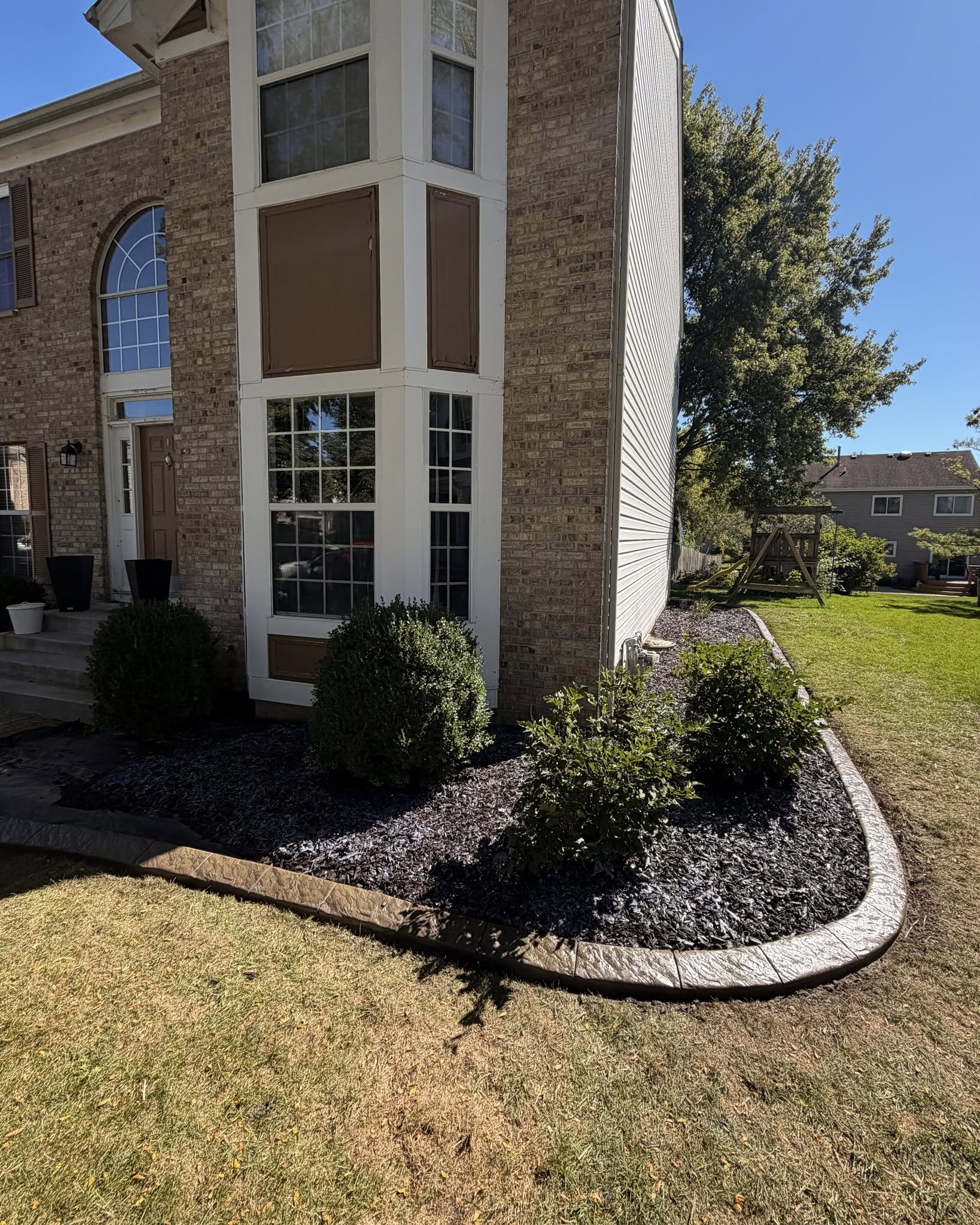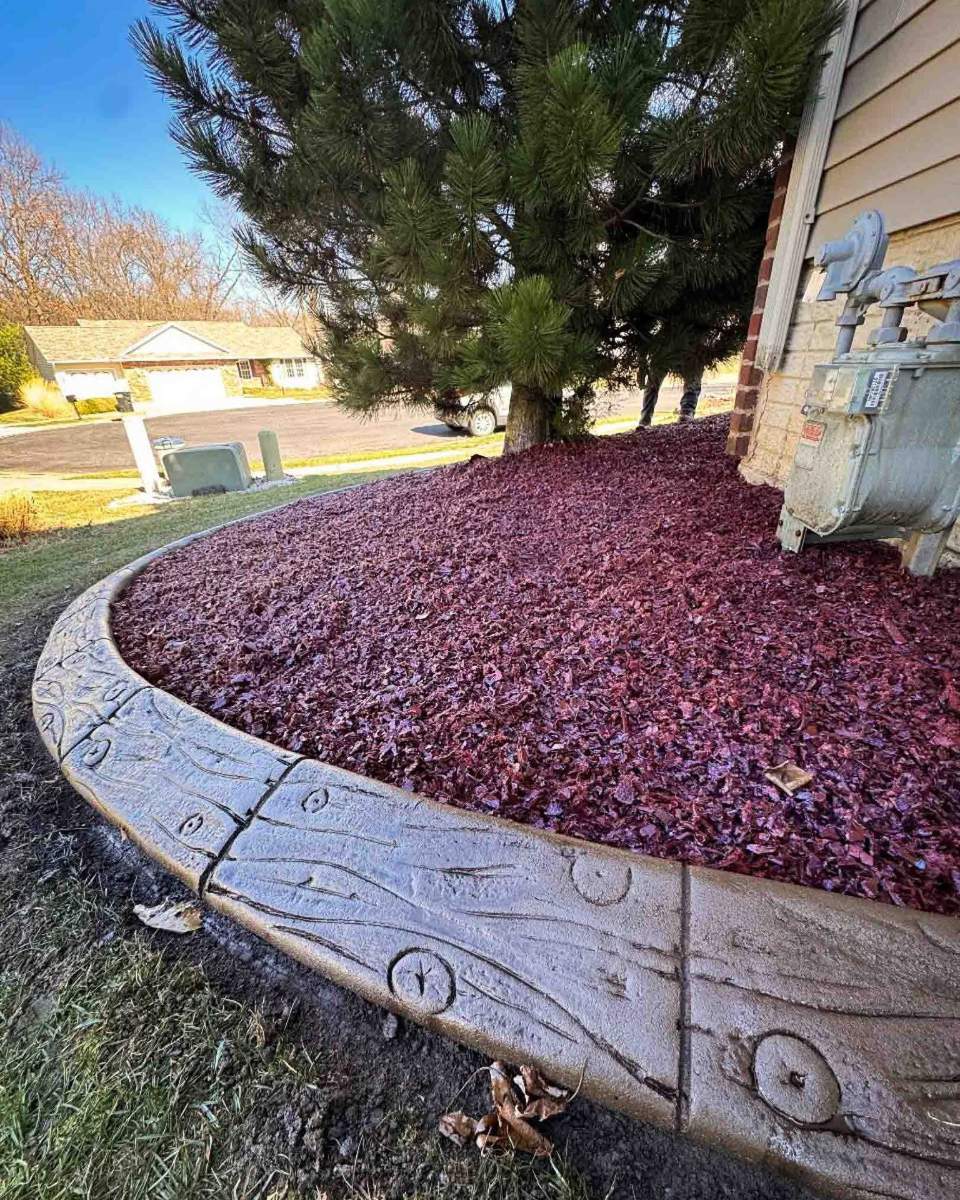


Quick Answer: Late-fall rain in Missouri can wash away mulch, erode soil, and leave garden beds vulnerable to winter damage. Installing durable, properly graded concrete landscape borders keeps mulch contained and water flowing where it belongs. For homeowners searching for reliable landscape borders Bridgeton MO, a well-designed border system is one of the simplest ways to protect your beds through the wet season.
Key Takeaways
- Missouri’s late-fall rain patterns can erode mulch and destabilize garden beds if borders aren’t properly installed.
- Concrete landscape borders create a physical barrier that holds mulch in place and directs water away from plant roots.
- Homeowners searching for landscape borders Bridgeton MO should prioritize proper grading, drainage gaps, and seasonal maintenance before winter sets in.
Missouri’s autumn weather doesn’t ease gently into winter. One week brings crisp, dry afternoons perfect for raking leaves, and the next delivers days of steady, cold rain that can undo months of landscaping work in a single weekend. For homeowners who’ve spent the fall mulching their beds to protect plant roots from frost, this late-season rain presents a real risk. Without the right border system in place, mulch washes into lawns, driveways, and storm drains, leaving bare soil exposed to erosion and temperature swings.
This is where landscape borders come in. A well-installed border does more than add curb appeal. It acts as the first line of defense against water runoff, holding mulch in place and guiding rain where it belongs. At AE Landscape Borders, we’ve seen firsthand how the right border material and installation technique can mean the difference between a garden bed that thrives through winter and one that needs to be completely reworked come spring.
Why Does Late-Fall Rain Threaten Mulched Beds in Missouri?
Missouri sits in a climate zone where fall rainfall can be unpredictable and intense. The combination of saturated soil, falling temperatures, and heavier rain events common in October and November creates ideal conditions for mulch displacement. When rain falls faster than soil can absorb it, water runs across the surface of a bed rather than soaking in, carrying loose mulch with it.
This runoff doesn’t just create a mess. It strips away the insulating layer that mulch provides, exposing plant roots to sudden freezes. It can also cause soil compaction and erosion around the base of shrubs and perennials, weakening their root systems heading into the coldest months of the year.
Beds without clearly defined edges are especially vulnerable. Mulch has nowhere to go but outward, spreading across walkways and lawns with every heavy rainfall. That’s why so many Missouri homeowners turn to permanent border solutions before winter arrives rather than after the damage is done.
How Do Concrete Landscape Borders Prevent Mulch Erosion?
Concrete landscape borders work by creating a rigid, continuous barrier between garden beds and surrounding surfaces. Unlike plastic edging or loosely stacked stones, concrete borders are poured or installed to sit flush against the soil line, leaving no gaps for mulch or water to slip through.
A few specific features make concrete particularly effective for Missouri’s wet, freeze-thaw climate:
- Rigid structure: Concrete doesn’t shift or heave the way plastic or metal edging can after repeated freeze-thaw cycles, which are common during Missouri’s unpredictable late-fall temperature swings.
- Consistent height: A properly installed border keeps mulch contained at a uniform level, preventing the uneven pooling that leads to runoff in low spots.
- Long-term durability: Concrete resists the cracking and warping that affects cheaper edging materials over multiple seasons, meaning less maintenance year after year.
For homeowners comparing options, concrete makes the most sense if long-term durability and minimal upkeep matter more than upfront installation cost. Those on a tighter budget who don’t mind more frequent replacement might consider plastic edging instead, though it typically won’t hold up as well against Missouri’s wet autumns and icy winters.
What Should You Look for in Landscape Borders in Bridgeton MO?
If you’re researching landscape borders Bridgeton MO homeowners trust, a few installation details make all the difference in how well your borders perform through the rainy season:
Proper Grading Around the Border
Borders should be installed with a slight slope directing water away from the bed and toward designated drainage areas, such as a lawn or gravel path. Without this grading, water can pool against the border and seep underneath, undermining its stability over time.
Depth and Anchoring
A border that’s only an inch or two into the ground won’t hold up against heavy rain or frost heave. Most concrete borders should be set several inches deep, anchored into compacted soil, to resist shifting during Missouri’s freeze-thaw cycles.
Drainage Gaps in Low-Lying Beds
In beds that tend to collect standing water, small gaps or weep holes along the border can help excess water escape without washing mulch out entirely. This balance—containing mulch while still allowing drainage—is key to a border that performs well through an entire Missouri winter.
What Else Can You Do to Protect Mulched Beds Before Winter?
Borders are a critical piece of the puzzle, but a few additional steps can further protect your beds from late-fall rain:
- Refresh mulch depth. Aim for two to three inches of mulch. Too little won’t insulate properly, and too much can smother roots or wash away more easily.
- Check downspouts and gutters. Make sure runoff from your roof isn’t being directed straight into garden beds, which can overwhelm even well-built borders.
- Inspect borders annually. Freeze-thaw cycles can gradually shift even durable materials. A quick fall inspection lets you catch and fix small issues before they become bigger problems.
- Clear debris from drainage paths. Fallen leaves and sticks can block the natural flow of water, causing it to pool where you least want it.
Protect Your Garden Beds Before the Next Storm
Late-fall rain in Missouri isn’t something you can control, but how your garden beds handle it is within your power. Installing durable concrete landscape borders gives your mulched beds the structure they need to withstand heavy rain, protect plant roots, and carry your landscaping investment safely into winter.
If you’re ready to explore landscape borders Bridgeton MO homeowners rely on for lasting protection, AE Landscape Borders can help you design and install a system built for Missouri’s unpredictable weather. Reach out today to schedule a consultation before the next round of fall storms arrives.
Frequently Asked Questions
How much does it cost to install concrete landscape borders?
Costs vary based on the length of the border, site conditions, and design complexity, but concrete borders generally cost more upfront than plastic or metal edging. The investment typically pays off through reduced maintenance and replacement costs over time.
How long does it take to install landscape borders?
Most residential landscape border installations can be completed within one to two days, depending on the size of the project and weather conditions during installation.
Are concrete borders better than plastic edging for Missouri winters?
Yes, for homeowners prioritizing durability. Concrete resists the cracking and shifting that plastic edging often experiences during Missouri’s freeze-thaw cycles, making it a stronger long-term choice for wet, cold winters.
Can landscape borders help with drainage issues, or just mulch containment?
Properly installed borders do both. When graded correctly and paired with drainage gaps where needed, they contain mulch while also directing water away from beds and toward appropriate runoff areas.
Is it too late to install borders before winter?
As long as the ground isn’t frozen, borders can typically be installed throughout most of the fall season. Scheduling installation sooner rather than later ensures your beds are protected before the heaviest late-season rains arrive.