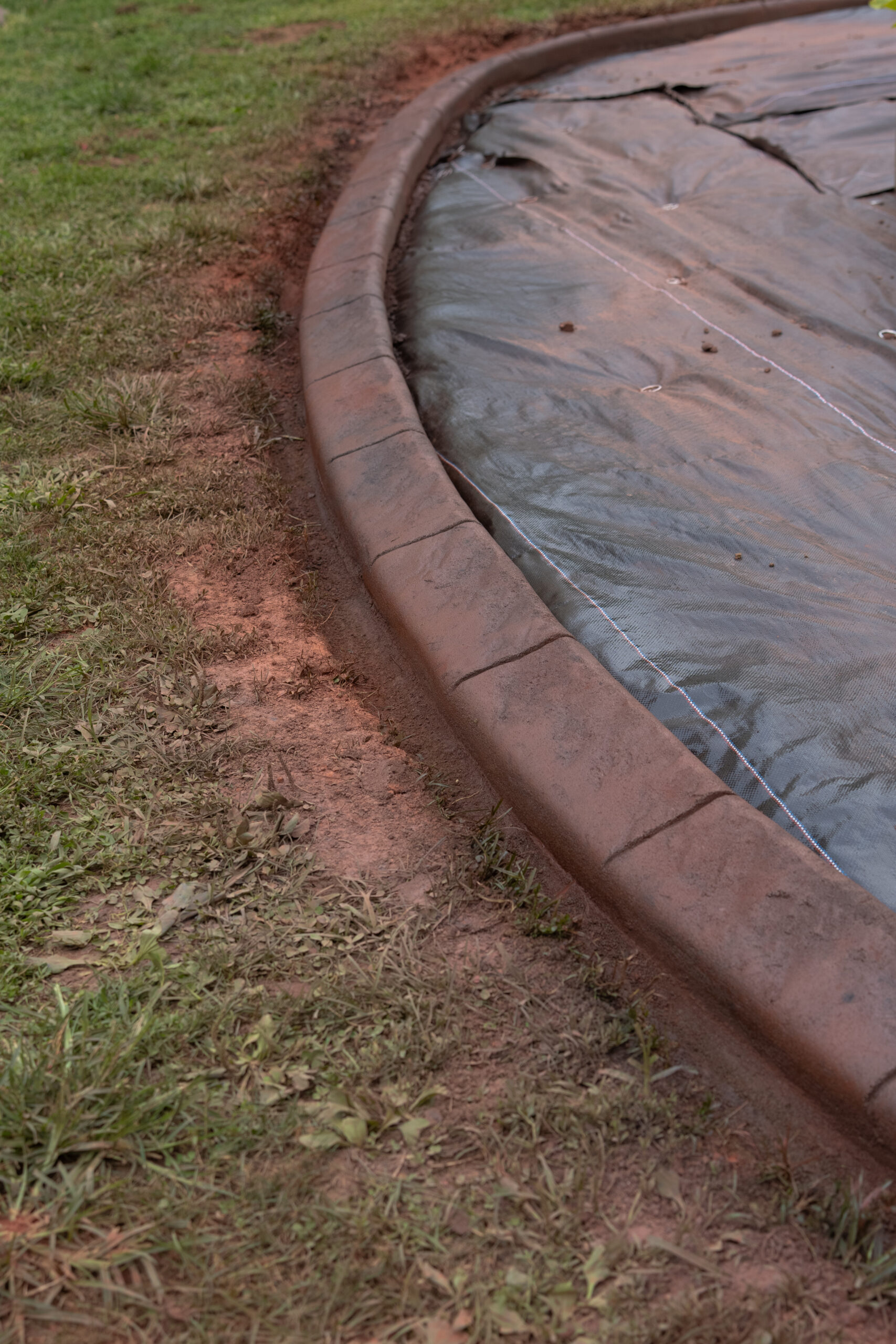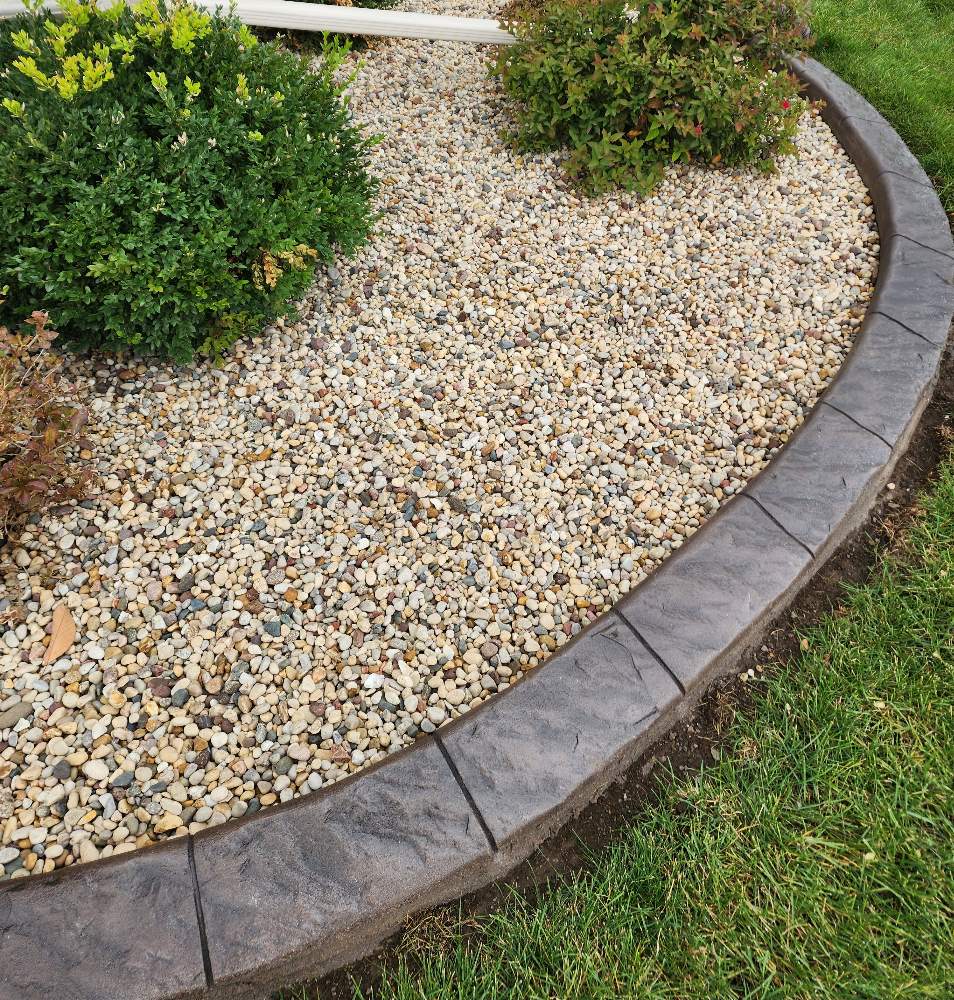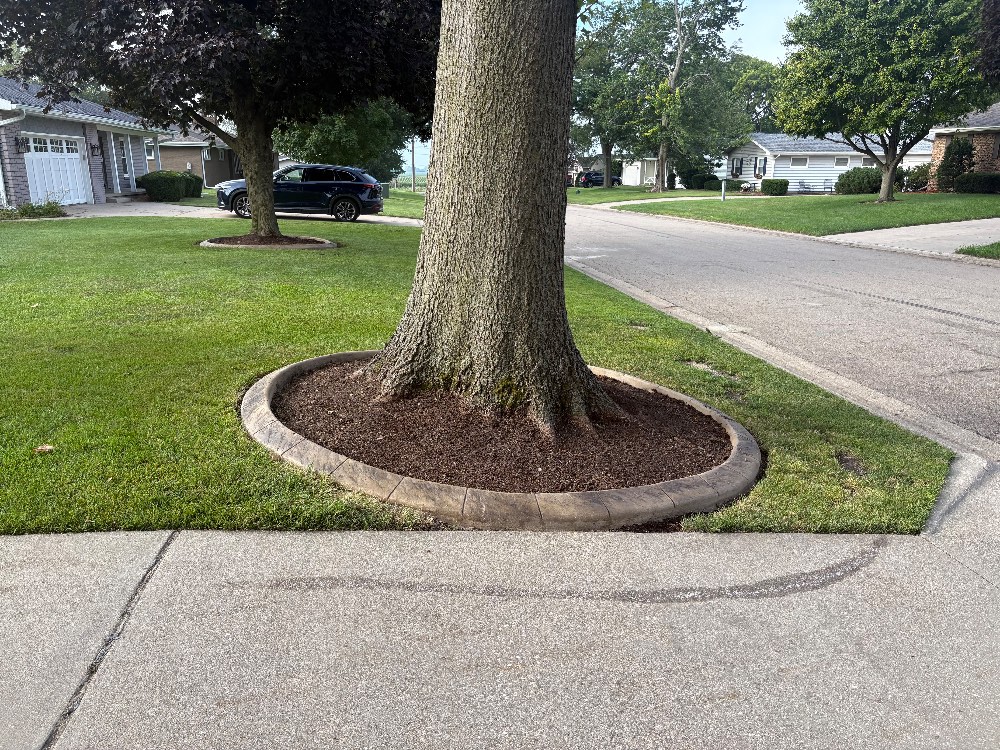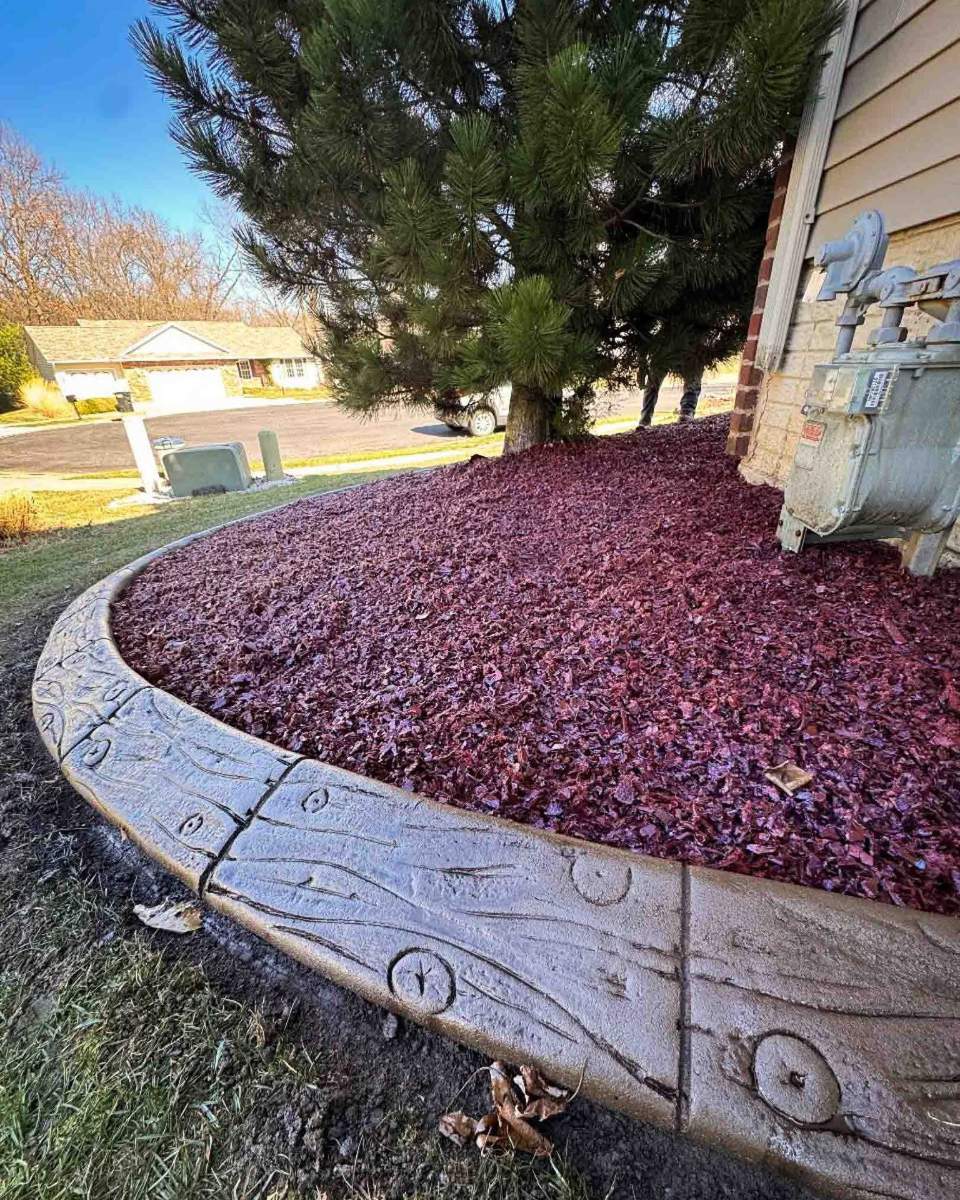


Quick answer: Loose mulch and fallen leaves migrate onto walkways because nothing physically stops them. Installing concrete walkway edging creates a permanent barrier that keeps landscape beds contained, reduces fall cleanup, and protects pathways from erosion year-round. For homeowners searching for walkway edging Bloomington IL, AE Landscape Borders installs custom concrete borders designed to handle Midwest seasons.
Key Takeaways
- Concrete borders create a permanent physical barrier that stops mulch and leaves from spilling onto walkways, cutting down on raking and sweeping.
- Unlike plastic or metal edging, concrete resists frost heave and lawn equipment damage, making it a durable choice for Illinois winters.
- Professionally installed concrete walkway edging adds curb appeal while reducing long-term maintenance costs.
Every autumn, the same frustration returns: you rake your yard clean, only to find leaves and mulch scattered right back across your walkway within days. Wind, rain, and foot traffic all push loose material past the edge of garden beds, turning a tidy path into a slippery, cluttered mess. The fix isn’t more raking — it’s a defined border that keeps materials where they belong in the first place.
That’s where concrete edging comes in. Unlike temporary solutions like plastic strips or stacked stones, a poured concrete border creates a clean, permanent line between your landscaping and your hardscape. For homeowners in Bloomington, Illinois, where freeze-thaw cycles and heavy fall foliage are part of the seasonal routine, this kind of durability makes a real difference.
Why Do Leaves and Mulch End Up on Walkways in the First Place?
Mulch and leaves aren’t just blown around at random. Without a physical boundary, loose material naturally spreads toward the path of least resistance — and a flat, open walkway is exactly that. Rainwater runoff carries mulch downhill, wind lifts dry leaves across unedged beds, and foot traffic kicks material loose over time.
Homeowners often try to manage this with frequent blowing or raking, but that’s a constant maintenance cycle rather than a solution. Addressing the root cause means giving your landscape beds a defined edge that holds everything in place, regardless of weather.
How Does Concrete Walkway Edging Solve the Problem?
Concrete walkway edging works by creating a raised or flush barrier between your mulch beds and your paved surfaces. Because it’s poured and cured in place, it forms a continuous, solid boundary with no gaps for leaves or mulch to slip through.
This matters most during fall, when leaf litter is heaviest, and during spring, when fresh mulch is typically applied. A well-installed border holds mulch in place through heavy rain and wind, meaning less debris on your path and less material you need to replace each season.
What Makes Concrete a Better Choice Than Plastic or Metal Edging?
Plastic and metal edging are common lower-cost options, but they come with trade-offs that concrete doesn’t share:
- Frost heave resistance: Illinois winters bring repeated freeze-thaw cycles that push shallow plastic or metal edging out of the ground over time. Concrete, when properly installed below the frost line, holds its position.
- Durability against equipment: Lawnmowers and trimmers can bend or crack plastic edging within a season or two. Concrete withstands this kind of everyday contact.
- Long-term value: While concrete typically costs more upfront, it doesn’t require the periodic replacement that plastic edging does, which lowers the total cost of ownership over several years.
Choose concrete if you want a border that lasts a decade or more with minimal upkeep. Choose plastic only if you’re working with a tight budget and plan to replace edging every few years.
What Does the Installation Process Look Like?
A typical concrete edging project involves a few clear steps:
- Design and layout: The installer maps out the border line along your existing walkway and garden beds.
- Excavation: A trench is dug to the appropriate depth, which varies based on local frost depth and soil conditions in the Bloomington area.
- Form setting and pouring: Forms are placed to shape the border, and concrete is poured and leveled.
- Curing and finishing: The concrete cures over several days, after which any decorative finishing — such as a stamped or colored surface — is applied.
Professional installation ensures the edging is set at the correct depth and angle to shed water away from the walkway rather than toward it, which further reduces debris buildup and prevents pooling.
How Much Does Walkway Edging Cost in Bloomington, IL?
Pricing for walkway edging Bloomington IL projects depends on the length of the border, soil conditions, and any decorative finishing you choose. Straight, unfinished borders cost less than curved designs or those with stamped or colored concrete. Getting a local quote is the most reliable way to understand pricing for your specific property, since soil type and existing hardscape layout both affect labor and material needs.
Is Concrete Edging a Good Fit for Every Yard?
Concrete borders work well for most residential landscapes, particularly those with established mulch beds, garden borders, or walkways that see regular leaf and debris buildup. They’re especially useful for properties with sloped yards, where runoff tends to carry mulch downhill onto paved surfaces.
That said, homeowners planning frequent landscape redesigns may prefer a more flexible edging option, since concrete is permanent once installed. For anyone settled into their current layout and looking for a long-term solution, concrete remains the more practical choice.
Protect Your Walkways This Fall
Raking leaves off your walkway every few days isn’t a long-term fix — it’s a symptom of a landscape missing a proper boundary. A professionally installed concrete border solves the problem at its source, keeping mulch and leaves contained through every season while adding a clean, finished look to your property.
If you’re ready to stop sweeping mulch off your path every week, AE Landscape Borders can design and install a border suited to your yard’s layout and Bloomington’s seasonal conditions. Reach out today to schedule a consultation and get a clear estimate for your project.
Frequently Asked Questions
How long does concrete walkway edging last?
When properly installed below the frost line, concrete edging can last 15 to 20 years or longer with minimal maintenance, far outlasting plastic or metal alternatives.
Will concrete edging crack during winter?
Properly installed concrete, poured to the correct depth and with appropriate control joints, is designed to withstand Illinois freeze-thaw cycles without significant cracking.
Can concrete edging be curved to match my garden beds?
Yes. Concrete is poured into custom forms, so it can be shaped into curves, angles, or straight lines to match your existing landscape design.
Is concrete edging more expensive than plastic edging upfront?
Generally, yes. Concrete costs more initially than plastic, but it requires far less replacement and repair over time, often making it more cost-effective over the life of your landscaping.
Do I need a professional to install concrete walkway edging?
While small DIY kits exist, professional installation ensures correct depth, proper drainage slope, and long-term durability — all factors that are harder to get right without experience.